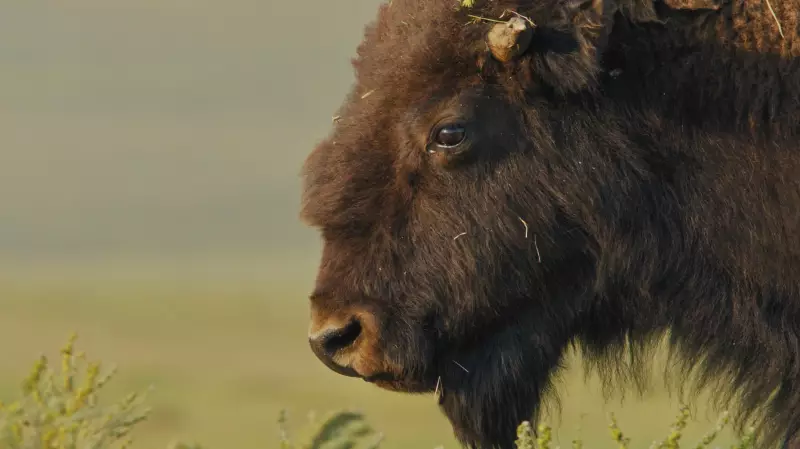
The triumphant return of the American bison to the plains of Montana represents far more than an ecological victory. For the Blackfoot Confederacy and other Indigenous nations, it marks the beginning of a profound cultural rebirth, a story powerfully told in the new documentary "Bring Them Home" ("Aiskótáhkapiyaaya").
A Keystone Species, A Cultural Foundation
Once numbering in the tens of millions, wild buffalo, known as "iinnii" in the Blackfoot language, were systematically brought to the brink of extinction in the 19th century. This was not merely a side effect of westward expansion but a deliberate strategy. As U.S. Army General Grenville M. Dodge infamously stated in 1867, "Kill every buffalo you can. Every buffalo dead is an Indian gone."
The impact was catastrophic. In roughly one generation, the bison population plummeted from an estimated 30 million to fewer than 1,000. For the Blackfoot people, this was an attack on the very core of their existence. Oscar-nominated actor Lily Gladstone, who is of Blackfeet and Nez Perce heritage and narrates the film, explains that iinnii are at the center of everything. "We are Buffalo people," Gladstone told HuffPost, noting that in hard times, they are taught "to be like buffalo," who face harsh winters and predators head-on.

The relationship was one of deep reciprocity. Blackfoot and other Plains tribes utilized every part of the buffalo in over 500 ways for sustenance, shelter, tools, and more. As Blackfeet elder G.G. Kipp states in the film, "We had everything — the means to sustain a rich and healthy life was with us." This connection was spiritual as much as it was practical, rooted in a worldview where humans are part of a circle, not atop a pyramid.
A Long and Turbulent Road to Restoration
Early attempts to reintroduce bison were fraught with conflict. In 1979, untamed herds from Yellowstone brought to Montana’s Blackfeet Reservation caused damage, leading many to see them as a burden. The tribal council sold them off within years. A movement in Canada in the early 1990s and another effort on the Blackfeet Reservation in 1998 faced similar resistance, often pitting tribal activists against Native ranchers and farmers who relied on the land for cattle.
A pivotal shift came through persistent grassroots dialogue, reviving what scholar Leroy Little Bear calls "buffalo consciousness." Elders noted that while younger generations knew ancestral stories and songs, these teachings lacked tangible connection without living buffalo on the land. In 2009, advocates formed the Iinnii Initiative, later partnering with conservation groups like the Wildlife Conservation Society, which highlighted the bison's crucial role as a keystone species.
Bison engineering the landscape benefits countless other species, from creating wallows for amphibians to grazing patterns that help grassland birds. "Almost everything about how bison live and move through the landscape benefits other animals," Gladstone explains in the documentary.
The Historic Homecoming at Chief Mountain
The coalition set an ambitious goal: to return a free-ranging herd descended from bison forced from Montana’s Flathead Reservation to Canada’s Elk Island National Park in the early 1900s. The question of where to place them was monumental, as much of the reservation was allocated for cattle ranching, a key economic driver.
After years of searching, the tribe identified a spiritually significant site: Ninastako, or Chief Mountain, a area bordering Glacier National Park and the reservation. Momentum built steadily until, in 2023, the tribal council officially set aside cattle land at Chief Mountain for the herd. That June, dozens of bulls, cows, and calves finally returned to soil their ancestors had roamed for millennia.

For tribal council member Tyson Running Wolf, it was a moment for the tribe’s "spirit to finally catch up with our humanness." Gladstone reflects that the arduous journey mirrors the buffalo's own resilience, requiring a community to break through storms and protect the young. "It’s all of them continuing on together," she said. "And that’s as long as they’re continuing, as long as their hooves are churning and moving the earth, then we continue as well."
The documentary "Bring Them Home," directed by Ivan MacDonald, Ivy MacDonald, and Daniel Glick, debuted on PBS on November 24. It stands as a testament to a community's unwavering fight to heal the land, reclaim its heritage, and assert its sovereignty through the powerful symbol of the buffalo's return.