A herd of wild Asiatic elephants suffered a devastating loss on Saturday, December 20, 2025, when a high-speed passenger train struck them as they crossed railway tracks in northeast India. The incident, which occurred in the early morning hours, resulted in the deaths of seven elephants.
A Tragic Morning in Changjurai Village
The collision took place near Changjurai village, located east of Guwahati in the Indian state of Assam. According to reports from The Associated Press, the train was traveling at speed when it encountered the herd on the tracks. The force of the impact was fatal for seven of the animals.
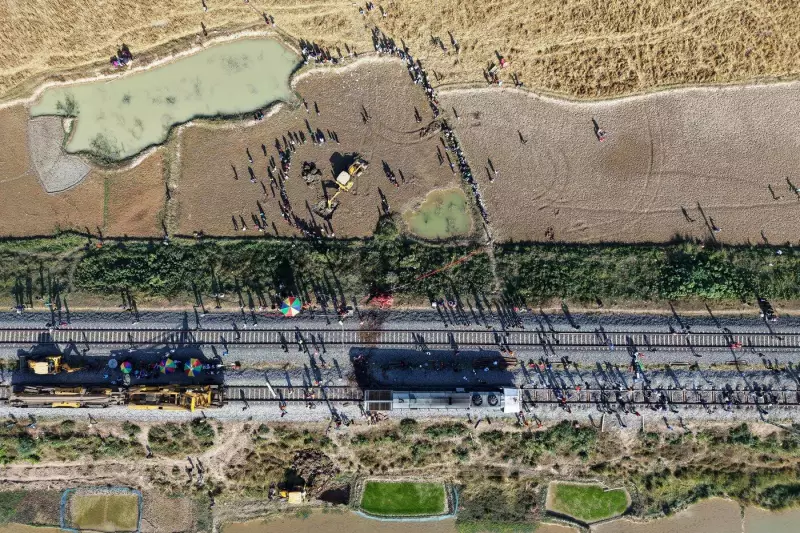
Following the accident, recovery crews used an excavator to remove the massive carcasses from the railway line. Photographs from the scene show workers preparing a large pit for burial, a somber task underscoring the scale of the loss. The images depict the challenging and grim aftermath faced by local authorities and conservationists.

Ongoing Conflict Between Development and Wildlife
This event is not an isolated tragedy but part of a persistent and growing conflict across parts of India and Asia. As railway networks expand and train speeds increase to meet transportation demands, they increasingly cut through traditional wildlife corridors and forest habitats.
The Asiatic elephant, an endangered species, is particularly vulnerable to such encounters. Herds follow ancient migratory routes that often now intersect with modern infrastructure. Collisions with trains and vehicles, alongside habitat fragmentation and poaching, pose significant threats to their survival.
Broader Implications for Conservation Efforts
The deadly incident has reignited urgent discussions among wildlife officials, conservation groups, and transportation authorities. Critics argue that more proactive measures are needed to prevent such tragedies. Potential solutions that have been suggested in similar contexts include:
- Reducing train speeds in known elephant crossing zones, especially during night and dawn hours when elephants are most active.
- Creating and maintaining dedicated wildlife underpasses or overpasses to allow safe passage.
- Implementing advanced early-warning systems, such as thermal sensors or patrols, to alert train drivers of animals on the tracks.
- Strengthening habitat corridors to ensure elephants have safe, connected forest areas away from rail lines.
The burial of the seven elephants in Changjurai serves as a stark reminder of the cost of inaction. Each death represents a significant blow to the genetic diversity and population stability of an already threatened species. For local communities and the global conservation community, the event is a call to find a more sustainable balance between economic development and the preservation of irreplaceable wildlife.