British Columbia's government is calling on Ottawa to provide crucial funding for a flood risk reduction plan in the Fraser Valley, a region battered by catastrophic flooding in 2021 and again by heavy rains this month. Provincial Minister of Emergency Management and Climate Readiness, Kelly Greene, stated that while solutions could be ready next year, the scale of the problem requires federal financial support.
Repeated Devastation Highlights Urgent Need
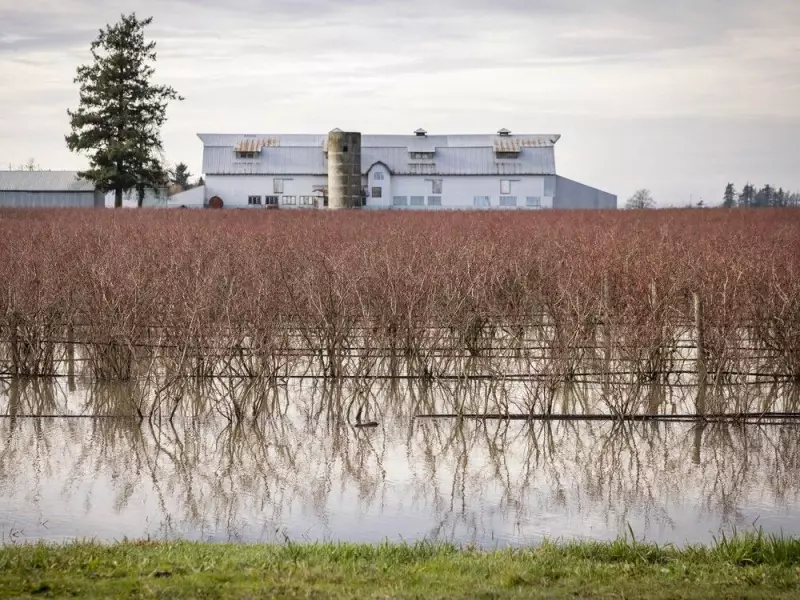
The Fraser Valley, a critical transportation and agricultural hub, is reeling from another severe flooding event. In December 2025, heavy rains from an atmospheric river flooded farmland, including blueberry fields near Abbotsford, and triggered hundreds of evacuation orders. This comes just four years after the region was devastated by similar floods in 2021, which also severely impacted the Interior communities of Merritt and Princeton.
Weary residents and farmers have voiced desperate calls for immediate action, stating they cannot continue to live under the constant threat of losing their homes and livelihoods. The flood-prone area is not only vital for local agriculture but also serves as a key corridor for national highways, rail lines, pipelines, and access to major ports that are Canada's gateway to Asian markets.

Federal Funding Gap Leaves Projects "Orphaned"
Minister Greene directly criticized the federal government for failing to follow through on significant promises made after the 2021 disaster. She highlighted a major obstacle: a key federal program designed to help communities build climate resilience has been retired and is no longer accepting applications.
"So, all the work that has to happen in Abbotsford, Merritt and Princeton has really been orphaned from mitigation dollars," Greene told Postmedia. The only federal mitigation assistance now available is through a post-disaster program starting in April 2025, leaving a critical funding gap for proactive work.
Federal officials did not immediately respond to questions about providing new flood mitigation money to B.C. A government website confirms the old program, which was allocated $3.86 billion starting in 2018, is fully subscribed.
Provincial Financial Woes Compound the Challenge
While pointing to Ottawa, the B.C. government under Premier David Eby also faces constraints. Greene recently informed Metro Vancouver representatives that no new funding is available for the province's flood strategy due to B.C.'s financial troubles. The province projects an $11 billion deficit this year, a stark reversal from the $5.7 billion surplus left by former premier John Horgan in 2023.
This fiscal reality means provincial spending has fallen far short of the billions needed for risk reduction projects identified after the 2021 floods. The situation is exacerbated in the Sumas Prairie area of Abbotsford, where flooding is worsened by overflow from Washington State's Nooksack River flowing north across the border.
The repeated crises underscore the escalating costs of climate change and the complex intergovernmental cooperation required to protect communities, infrastructure, and Canada's economic arteries from future atmospheric river events.