Toronto residents should prepare for increased coyote activity across the city as the annual mating season gets underway. The period, which runs from mid-January to March, typically leads to more frequent sightings as the animals become more visible and active.
City Issues Official Guidance for Coexistence
A spokesperson for the City of Toronto confirmed the seasonal pattern in a statement on Wednesday, January 15, 2026. "Residents may see coyotes more over the winter months as it is coyote mating season," the statement read. Officials emphasized that coyotes have successfully adapted to urban environments, where food and shelter are plentiful and natural predators are scarce.
The city has outlined several critical guidelines for maintaining safe coexistence with urban coyotes:

- Never feed coyotes under any circumstances.
- Always keep dogs on a leash during walks.
- Dispose of garbage properly and never leave trash outside of bins.
- If you encounter a coyote, do not run. Instead, make noise to scare it away.
- Never approach coyotes, their dens, or their young.
- Avoid touching a coyote, even if it appears tame, sick, or injured.
How to React During a Close Encounter
City experts describe coyotes as naturally timid animals that typically flee when confronted assertively. If you see a coyote, the recommended protocol is to never turn your back or run. Face the animal and slowly back away while keeping pets leashed and staying alert.
For more assertive encounters where a coyote approaches, the city advises a three-part strategy: Be Big, Be Loud, Be Assertive.
Be Big by unfurling and rapidly snapping a large, coloured garbage bag while walking toward the coyote and using a firm, loud voice. The combined visual and audio effect is known to alarm them.
Be Loud by using a whistle or air horn, stomping your feet, clapping your hands, and yelling clearly, "Go away coyote!"
Be Assertive by swinging a walking stick or cane, shining a flashlight directly on the animal, or throwing a small object like a tennis ball, pebble, or stick in its direction (not at it).
Recent History Prompts Action Plan
The need for public awareness and a formal strategy was highlighted last May when the Spadina-Fort York area became the latest neighbourhood to experience issues with aggressive coyotes. This led the city to implement its Downtown Coyote Action Plan.
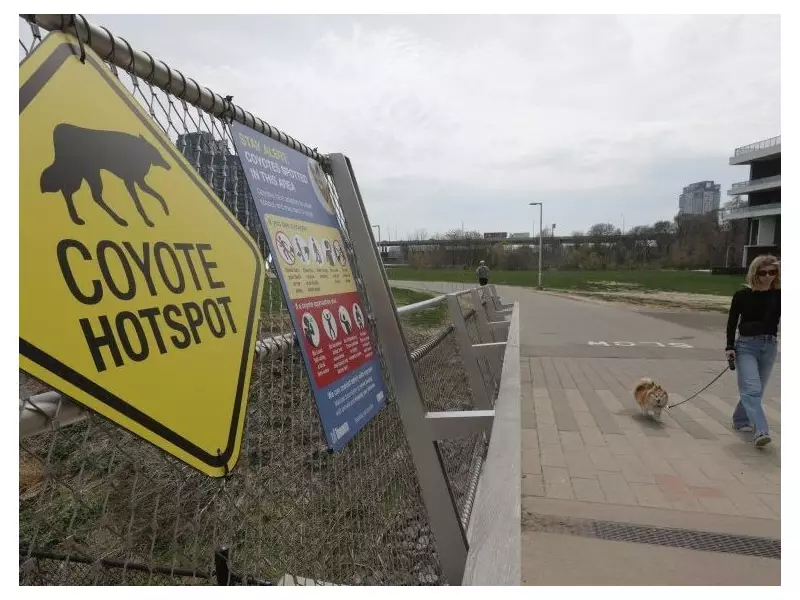
This plan was developed in response to a series of concerning incidents in Liberty Village and surrounding areas, particularly around Stanley Park, which had been identified as a coyote "hot spot." Residents reported that at least five dogs had been killed and several people injured by aggressive animals in that area prior to the plan's introduction.
New warning signs have recently been erected in the Fort York area to alert the community. As coyotes continue to be a permanent part of Toronto's urban ecosystem, officials stress that public education and proactive behaviour are key to ensuring safety for both people and wildlife.