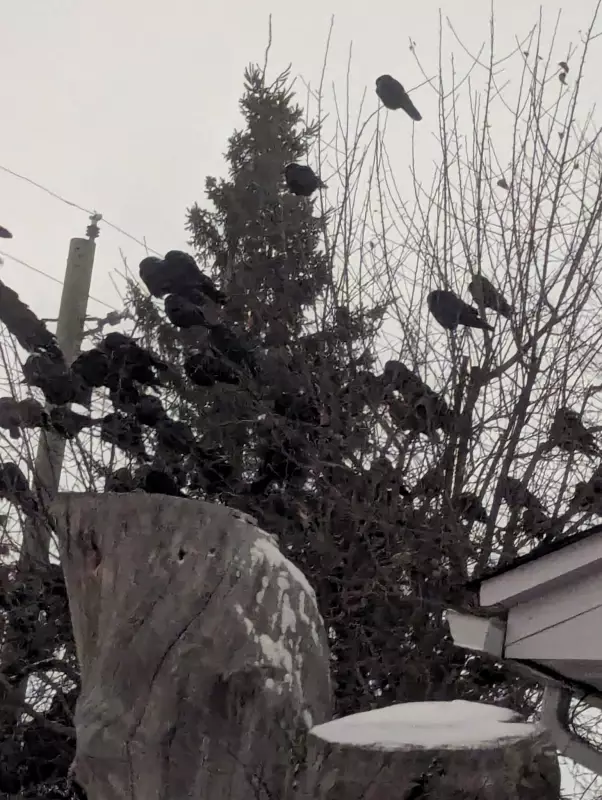
A remarkable natural phenomenon has descended upon a residential neighbourhood in the nation's capital, captivating residents and onlookers alike. Tens of thousands of crows have established a massive communal roost in Ottawa's Alta Vista area, creating a dramatic and noisy spectacle against the winter sky.
A Noisy Winter Gathering
The event, observed and reported on January 18, 2026, involves an immense congregation of the black-feathered birds settling in for the evening. Witnesses describe seeing swirling clouds of crows converging on the neighbourhood as dusk approaches, their cacophonous calls filling the air. The scale of the gathering is significant enough to draw widespread local attention and curiosity.
While the exact reasons for choosing this specific urban location are complex, such large winter roosts are a known behaviour among crows. The birds gather for warmth, protection from predators, and to share information about food sources. The Alta Vista area, with its mature trees and proximity to resources, appears to have become a temporary hub for this avian population.

Resident Reactions and Urban Coexistence
For residents of the affected neighbourhood, the roost is a double-edged sword. It presents a stunning display of nature's grandeur right in the city, but also brings practical challenges. The sheer number of birds results in significant noise during the evening and early morning, and their droppings can accumulate on properties, vehicles, and sidewalks.
Local authorities and wildlife experts often note that such roosts are usually temporary, with the birds dispersing to daytime foraging areas at dawn and returning at dusk. The phenomenon highlights the ongoing intersection of urban development and wildlife habitats in Canadian cities, prompting discussions about coexistence with native species.
Understanding the Crow's Behaviour
Crows are highly intelligent, social birds whose winter roosting behaviour is a survival strategy. These large gatherings, sometimes comprising birds from hundreds of kilometres away, are not uncommon in parts of Canada during the colder months. The Alta Vista roost in Ottawa is a particularly visible example due to its location within a densely populated residential zone.
Wildlife officials typically advise that the roosts are a natural, seasonal event and that the birds will likely move on as weather patterns and food availability change. They recommend that residents who are significantly impacted use non-harmonic deterrents if necessary, such as visual scares or noise devices, but emphasize that the crows are a protected species under the Migratory Birds Convention Act.
The spectacle serves as a powerful reminder of the dynamic natural world that persists within and around our urban centres, offering a unique, if sometimes messy, connection to wildlife for city dwellers.