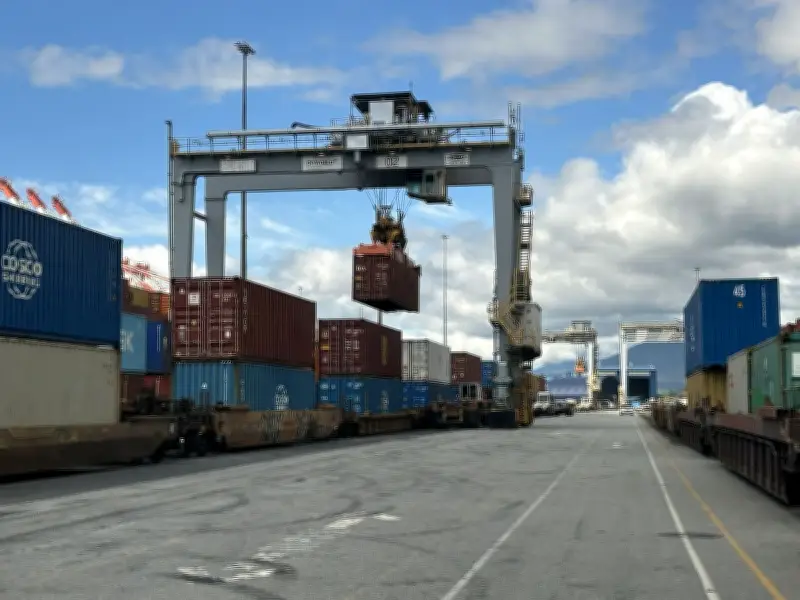
DP World has launched its first hybrid crane retrofit at its Prince Rupert terminal in British Columbia, reducing fuel consumption by more than 60% compared to conventional diesel-powered cranes and avoiding an estimated 100 tonnes of CO₂e emissions annually, according to a company announcement.
Hybrid Retrofit Details
Delivered in partnership with ZPMC North America Inc., the retrofit converts a conventional diesel-powered rubber-tired gantry (RTG) crane into a hybrid diesel-electric system. The upgrade replaces the existing large diesel engine with a smaller 80 kW generator that charges onboard batteries as needed, allowing the crane to run more efficiently while reducing overall fuel use.
The system also captures and reuses energy created when containers are lowered, further improving efficiency. Preliminary operating data indicates the retrofitted crane has reduced fuel consumption by more than 60% compared to a standard diesel-powered RTG. In addition to environmental benefits, the upgrade is expected to lower engine maintenance costs and improve overall crane reliability.

Operational Flexibility
Unlike fully electric cranes, the hybrid RTG operates independently of external charging infrastructure. The onboard diesel generator charges the battery system as needed, ensuring operational flexibility while delivering meaningful environmental benefits.
Doug Smith, CEO of DP World in Canada, said: “This retrofit is a practical example of how we are advancing decarbonization across our operations while maintaining high levels of productivity and performance. By integrating hybrid technologies into existing equipment, we can reduce emissions, improve fuel efficiency, and scale solutions that support more sustainable supply chains.”
Broader Decarbonization Strategy
DP World’s Prince Rupert terminal currently operates six RTGs, with the first hybrid conversion completed this year and additional retrofits planned in the coming years as part of a broader decarbonization and equipment modernization strategy.
The Prince Rupert retrofit builds on DP World’s broader efforts to explore low-emission cargo handling technologies across its Canadian operations. The company is currently running a pilot project for a hydrogen-powered RTG crane at the Port of Vancouver, demonstrating the potential of alternative fuel solutions to further reduce emissions from terminal equipment. Together, these initiatives reflect DP World’s commitment to testing and scaling innovative technologies that support the transition to lower-carbon port operations.