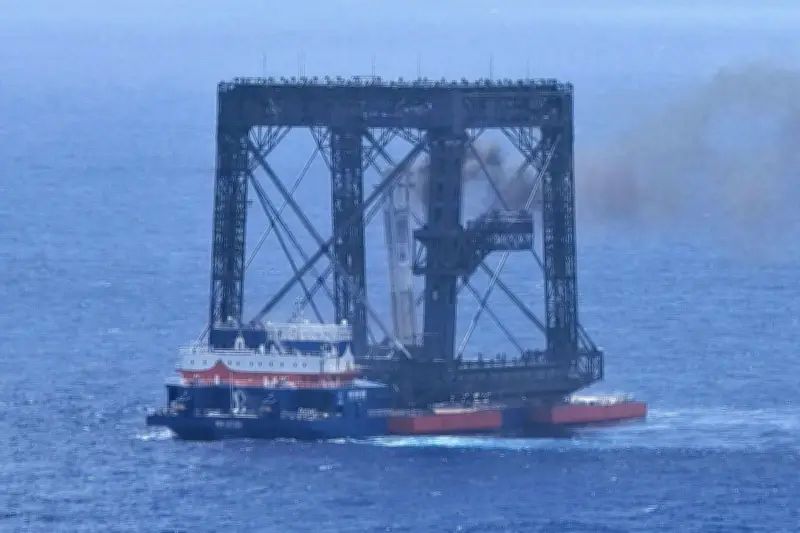
China has achieved a significant milestone in space technology by successfully recapturing the first stage of a Long March-10B carrier rocket using a net-capture system on a seaborne platform. The event took place near Wenchang in southern China's Hainan province on Friday, July 10, 2026, as confirmed by a drone photo released by Xinhua News Agency.
Net-Capture System Proves Effective
The recovery operation employed a net system mounted on a floating platform to catch the returning rocket stage as it descended. This method is designed to enable the reuse of rocket components, reducing costs and waste in space launches. The Long March-10B is a medium-lift rocket developed by the China Aerospace Science and Technology Corporation (CASC).
Impact on Space Industry
Reusing rocket stages is a key goal for space agencies and private companies worldwide, as it can dramatically lower the expense of access to space. China's success with the net-capture technique adds a new approach to recovery methods, which have previously relied on propulsive landing (as used by SpaceX) or parachute recovery. According to analysts, this development could accelerate China's plans for more frequent and affordable launches, supporting its ambitious space station and lunar exploration programs.

The achievement also highlights China's growing capabilities in autonomous and remote-controlled recovery operations. The seaborne platform was positioned in the South China Sea, and the net system was guided by real-time tracking data to ensure a precise capture.