B.C. Unveils Landmark Renewable Power Agreement for Ksi Lisims LNG Project
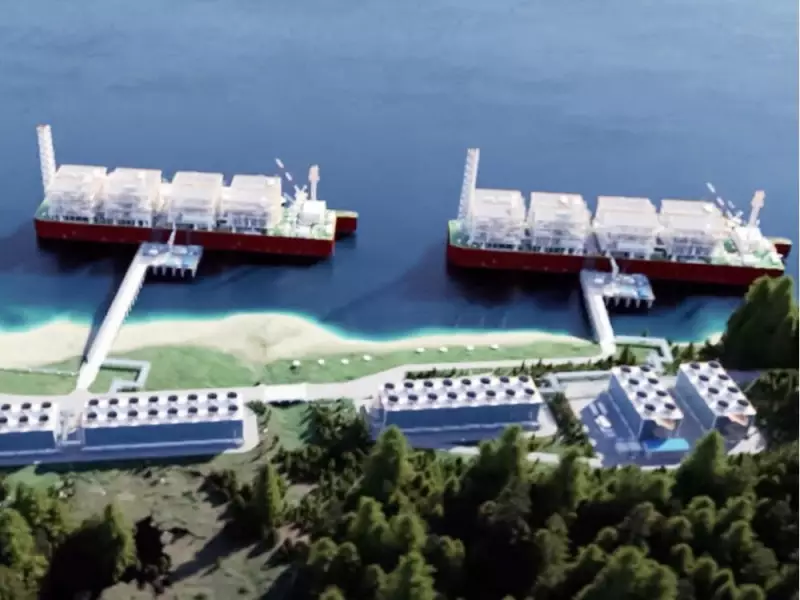
British Columbia has taken a significant step forward in its clean energy strategy with the announcement of a groundbreaking agreement to supply renewable electricity to the proposed Ksi Lisims liquefied natural gas project. The deal, unveiled by Energy Minister Adrian Dix and B.C. Hydro CEO Charlotte Mitha alongside Nisga'a Nation president Eva Clayton, promises to deliver power equivalent to half the output of the massive Site C dam through the yet-to-be-built North Coast transmission line.
Major Commitment to Renewable Energy Infrastructure
The agreement represents a substantial commitment from B.C. Hydro, with the utility pledging to provide up to 600 megawatts of renewable electricity to the Ksi Lisims LNG facility by 2030. This power delivery is contingent upon a positive final investment decision from the project's partners, who are currently evaluating what could become a $30 billion investment in British Columbia's north coast region.
This arrangement marks Ksi Lisims as the first major customer for B.C. Hydro's proposed North Coast transmission line, a $6 billion infrastructure project that the utility describes as "a foundational investment" for unlocking economic opportunities in the rapidly developing northern region of the province.

Strategic Importance for Economic Development
Minister Dix emphasized the strategic importance of this agreement during the announcement at the B.C. Natural Resources Forum in Prince George. The transmission line infrastructure is expected to support not only the Ksi Lisims LNG project but also other potential developments including mining proposals and northern port expansions.
According to government projections, these combined developments could create approximately 9,700 jobs, generate $10 billion in annual economic activity, and contribute $950 million in government revenue. "I'm not saying because we're doing this, they're going to get the final investment," Dix clarified, "But they would not be able to get to final investment if we had not done these things, and that is the role of B.C. Hydro."
Environmental Considerations and Project Timeline
Nisga'a Nation president Eva Clayton described the agreement as "a critical step to connecting Ksi Lisims to B.C. Hydro's clean electricity grid" that provides necessary clarity for advancing the project. She emphasized that the arrangement reflects the Nisga'a Nation's commitment to development that protects the environment while creating lasting benefits for communities.
The Ksi Lisims project aims to produce what its developers call "the world's lowest-emission LNG" by utilizing renewable electricity for liquefaction processes. This approach represents a significant departure from traditional LNG production methods that typically rely on fossil fuels for power generation.
Infrastructure Challenges and Power Supply Questions
The announcement comes at a time when B.C. Hydro is facing questions about its power supply capacity. The utility has been in a period of net electricity imports due to low snowpack conditions from previous years, which has led critics to question where the additional power for this commitment will originate.
Despite these concerns, Minister Dix expressed confidence in the timeline, stating that B.C. Hydro's objective is to have "shovels in the ground in 2026" for the North Coast transmission line. The utility is addressing power supply needs through its 2024 call for power from independent producers, which aims to deliver more than 1,600 megawatts of electricity between 2028 and 2033.
Looking Forward: Implications for British Columbia's Energy Future
This agreement represents a significant milestone in British Columbia's evolving energy landscape, balancing economic development objectives with environmental considerations. The Ksi Lisims LNG project, if it proceeds to final investment decision, would become a major consumer of renewable electricity in the province while potentially establishing new standards for low-emission LNG production globally.

The success of this arrangement will depend on multiple factors including timely construction of the North Coast transmission line, sufficient renewable power generation capacity, and the final investment decision from the Ksi Lisims partners. As British Columbia positions itself as a leader in clean energy development, this agreement demonstrates the complex interplay between infrastructure investment, economic development, and environmental stewardship in the province's energy policy.