Alberta's Clean Energy Investment Collapse: A Self-Inflicted Economic Blow
Recent reports reveal a stark contrast between Alberta's renewable energy sector and global trends, with the province's investment in clean power sources cratering dramatically. According to the Business Renewables Centre's Renewables in Review 2025, investment in renewable energy in Alberta has all but disappeared, marking a significant setback for the province's energy transition.
Stalled Projects and Minimal Growth
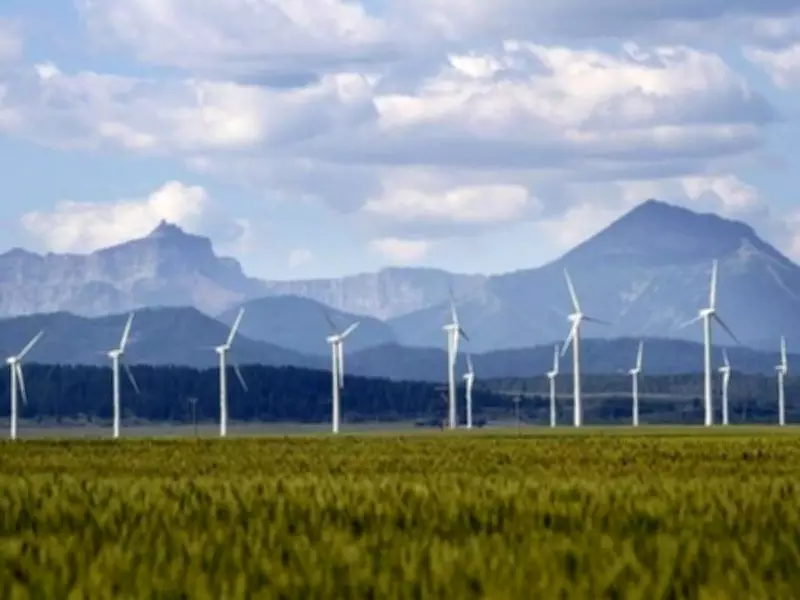
The report indicates that new wind projects in Alberta have "stalled altogether," causing the province to actually lose grid-connected wind capacity. Meanwhile, solar energy added only 38 megawatts in 2025, representing its smallest gain since 2019. This stagnation comes at a time when the global renewable energy sector is experiencing unprecedented growth.
Global Investment Surges While Alberta Lags
Bloomberg NEF's Energy Transition Investment Trends 2026 reported a staggering $2.3-trillion global investment in renewable energy in 2025, representing an eight percent year-over-year increase despite significant trade disruptions. While the world races toward clean energy solutions, Alberta continues to prioritize pipelines to markets that are rapidly transitioning away from fossil fuels.

The global shift toward clean energy is undeniable. China continues to attract the largest share of clean-tech manufacturing investment, while the United States, European Union, and India are actively onshoring their own clean-tech supply chains. Meanwhile, Energy Analytics reports that global investment in upstream oil and gas fell to $567 billion in 2025, a 35-percent decline from the $869 billion invested in 2015.
Economic Consequences Already Visible
The consequences of Alberta's policy direction are already materializing. The oil and gas sector lost 10,000 jobs in 2025, meaning the oilpatch now employs less than five percent of Albertans. Most of these losses are attributed to automation in the oilsands and layoffs designed to maximize profit-taking. While strong employment trends in construction, manufacturing, and professional services have partially offset these losses, they foreshadow the province's employment future.
As a direct result of Alberta's declining investments in solar, wind, and battery storage, Canada has dropped out of the top 10 countries investing in clean, inexpensive renewable energy, only to be replaced by Saudi Arabia. This represents a significant reversal for a province that once led corporate procurement of renewable energy in Canada.
Policy Decisions and Industry Influence
The Business Renewables Centre report notes that "after pioneering business investment in renewable energy in Canada, as of 2025, Alberta no longer leads the country in corporate procurement capacity." This decline raises questions about the provincial government's priorities and decision-making processes.
Ironically, China, India, and Japan—all top-10 clean-energy investors—are targets for Alberta's pipeline dreams to export fossil fuels to Southeast Asia. These short-term market opportunities will likely be eclipsed by the surge of inexpensive wind and solar power being developed globally. Even in the United States, investment in renewable energy increased 3.5 percent in 2025 despite policy changes under the Trump administration.
The revolving door between Alberta's government and the oil and gas industry has raised concerns about policy decisions. Senior officials, including Premier Danielle Smith, have moved between government posts and corporate petroleum lobbyist positions, creating potential conflicts of interest that may influence the province's energy strategy.
Alberta's failure to adapt to the global energy transition represents a significant economic risk. By shunning the largest investment trend on the planet to appease oil and gas companies, the province risks leaving Albertans and their future economy to pay a heavy price for this self-inflicted wound.