As the British Columbia government prepares its next budget, it faces the perennial challenge of balancing immediate fiscal pressures against long-term strategic investments. According to outdoor recreation advocate Louise Pedersen, one area where this balance is critically important is funding for provincial parks and outdoor recreation infrastructure.
The Ant and Grasshopper Lesson for Modern Budgeting
Pedersen draws a compelling parallel to Aesop's fable of the ant and the grasshopper to illustrate her point. "The lesson isn't about blame, but about foresight," she writes. "Short-term savings can lead to long-term costs and missed opportunities." This wisdom, she argues, should guide budget decisions regarding outdoor recreation at a time when demand has reached unprecedented levels.
Record Demand Meets Rising Costs
More British Columbians and visitors than ever before are engaging in outdoor activities including paddling, sledding, hiking, biking, and camping. Simultaneously, maintenance costs are escalating due to inflation and climate-driven events like floods and fires. Despite this convergence of factors, outdoor recreation and parks funding often gets categorized as discretionary spending—more easily trimmed than healthcare, education, or support for struggling resource communities.

"Reducing investment in outdoor recreation risks saving dollars this year only to incur much higher costs down the road," Pedersen warns. She characterizes this approach as potentially short-sighted, similar to the grasshopper ignoring winter's approach.
The Kettle Valley Railway: A Case Study in Contradiction
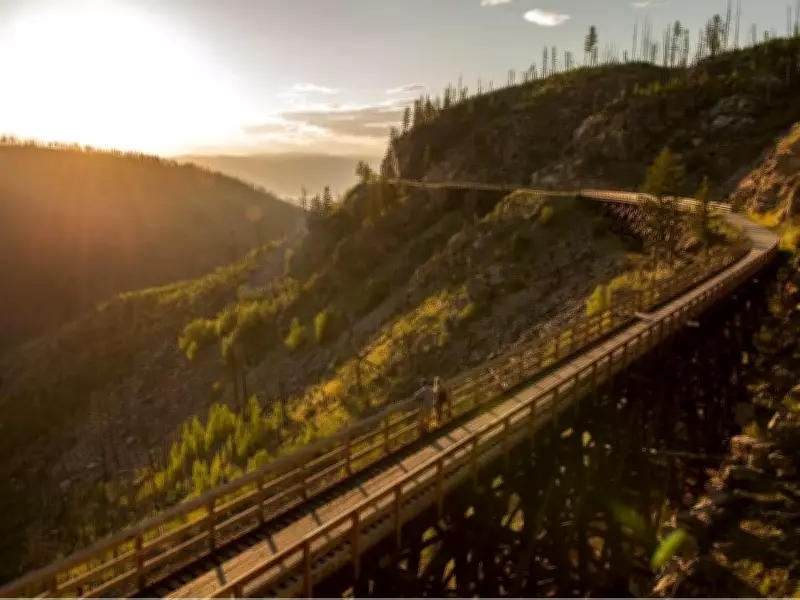
A recent announcement highlights this tension. Recreation Sites and Trails B.C. has decided to abandon a 67-kilometer section of the Kettle Valley Railway—a converted multi-use trail in the southern interior—citing flood damage and escalating maintenance expenses. Pedersen argues this decision overlooks the significant economic potential of intact rail trails, particularly as cycle tourism continues to grow in popularity.
The Economic Mathematics of Trail Maintenance
Research from New Zealand demonstrates that every dollar invested in rail trail maintenance generates approximately $3.50 in local revenue. In British Columbia, increased traffic on other sections of the Kettle Valley Railway has already extended the tourist season by several months. Cyclists represent particularly valuable visitors because they tend to spend more money than automobile-based tourists, moving more slowly and stopping more frequently at local businesses.
What makes this situation particularly perplexing, according to Pedersen, is the provincial government's contradictory approach. While abandoning rail trails near Princeton, the same government is actively encouraging new tourism businesses on a rail trail in the North Okanagan region. "It's like throwing food out with one hand while grabbing it with the other," she observes.
The Broader Implications for Budget 2026
As Budget 2026 takes shape, Pedersen urges provincial decision-makers to recognize that investments in outdoor recreation infrastructure represent more than mere discretionary spending. They constitute strategic economic investments that yield substantial returns through tourism revenue, community development, and public health benefits.
The growing provincial deficit and economic uncertainty create real pressures, but Pedersen maintains that cutting parks and recreation funding represents false economy. Sustainable, long-term funding for these assets, she concludes, represents an investment in British Columbia's future—one that will pay dividends far beyond any short-term budget savings.