B.C. Pilot Project Transforms Construction Plastic Waste into Innovative Building Material
In a groundbreaking development for sustainable construction, a British Columbia pilot project is successfully converting plastic waste from construction sites into a valuable new building product. The initiative, led by the construction sustainability organization Light House, has demonstrated that up to 80 percent of plastic trash typically discarded from construction can be recycled into a material that reduces concrete usage in slab construction.
From Trash to Treasure: The Pilot Project Details
Light House received $400,000 in combined funding from provincial and federal governments to execute this innovative pilot project. Over the past 14 months, the organization collected 38 tonnes of plastic waste from eight construction sites across British Columbia's Lower Mainland. This material, which would normally end up in landfills or incineration facilities, has been transformed into egg-carton shaped forms called InfinaNET.
"At its core, the pilot is about understanding, in real working conditions, what it would actually take to recover these materials and reuse them," explained Gil Yaron, a managing director at Light House who headed the pilot project. "Construction is actually a major and largely overlooked source of plastic waste in Canada. It makes up about 30 percent of all plastic waste generated before a building is even completed."

The Recycling Process and Product Innovation
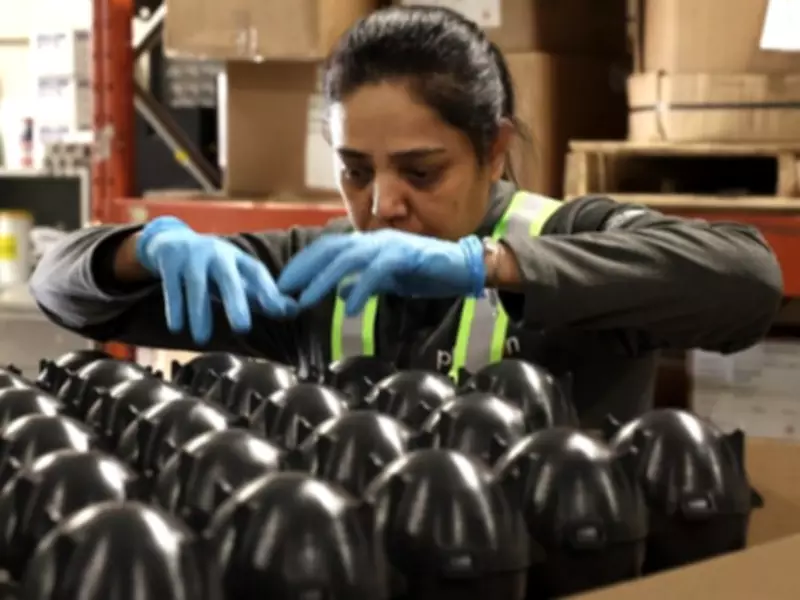
The recycling journey begins with plastic waste being shipped to a facility in Langley, where it is ground into pellets. These pellets are then transported to Plascon Plastics on Annacis Island in Delta, where they undergo extrusion moulding to create the InfinaNET product. The resulting material consists of four egg-shaped black plastic moulds linked together in a square formation.
Infina, the company that invented InfinaNET, has created a product that serves a dual environmental purpose. "We're essentially making concrete go a little bit further, 30 percent further, and then a source for plastic waste that would have normally ended up in landfill now ends up in a building product that's more sustainable," said Infina president Manveer Pattar.
Environmental Impact and Future Scaling
The environmental benefits of this innovation are substantial:
- Reduces concrete usage in slab construction by up to 30 percent
- Diverts plastic waste from landfills and incineration
- Addresses a significant source of plastic pollution in Canada
- Creates a circular economy solution for construction materials
Yaron emphasized that the pilot has successfully proven the concept's viability. "Now, we want to scale it," he stated, noting that both Light House and Infina need to sell the product to the broader construction sector. The recent test run at Plascon Plastics represented a "pre-commercial" production phase to create material for the company's own testing purposes.
The InfinaNET product works by creating air pockets within concrete slabs when knitted together inside re-bar forms before concrete pouring. This innovative approach not only reduces the carbon-intensive concrete required for construction but also provides a sustainable destination for plastic waste that would otherwise contribute to environmental pollution.
As construction continues to be a major contributor to plastic waste generation in Canada, this British Columbia initiative represents a promising step toward more sustainable building practices and waste reduction strategies in the industry.