Massive Winter Storm Threatens Eastern U.S. with Catastrophic Damage and Extreme Cold
A colossal winter storm system is advancing toward the eastern two-thirds of the United States, prompting urgent preparations as forecasters warn of potentially catastrophic damage, widespread power outages, and bitterly cold temperatures. On Thursday, residents from Texas to New England scrambled to stock up on essentials like bread and salt, while utility workers monitored forecasts nervously ahead of the impending weather event.
Forecast Details and Widespread Impact
The storm is expected to unleash a crippling ice storm across Texas and parts of the South, with snow accumulations potentially reaching up to a foot (30 centimeters) from Oklahoma through Washington, D.C., New York, and Boston. Following the initial onslaught, a surge of bitterly cold air could drive wind chills as low as minus-50 degrees Fahrenheit (minus-46 Celsius) in regions like Minnesota and North Dakota. Forecasters caution that the damage, particularly in ice-affected areas, could rival that of a hurricane, with approximately 160 million people under winter storm or cold weather watches and warnings.
Timeline and Immediate Preparations
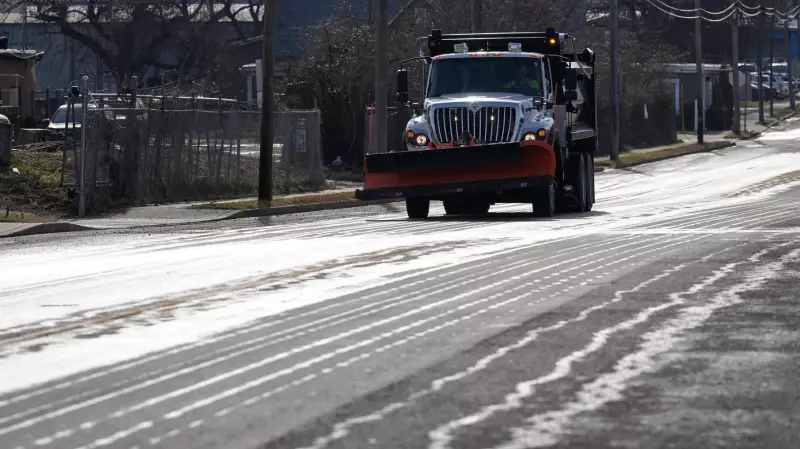
The storm is projected to commence on Friday in New Mexico and Texas, gradually moving eastward into the Deep South before impacting the East Coast and New England. In anticipation, cities like Nashville, Tennessee, have already deployed brine trucks to treat roadways, as seen in recent preparations. Cold air streaming from Canada has led to school closures in Chicago and Des Moines, Iowa, due to dangerous wind chills that could cause frostbite within minutes. The prolonged cold spell following the storm raises concerns about extended power outages and icy conditions lasting well into next week.

Regional Responses and Safety Measures
Governors across affected states have declared states of emergency, with Texas Governor Greg Abbott assuring residents that the power grid is stronger and more prepared than during a severe cold snap five years ago that resulted in hundreds of deaths. In Houston, CenterPoint Energy has mobilized 3,300 employees to address potential infrastructure issues. Similarly, states like Louisiana and Virginia are emphasizing road preparations, warming centers, and emergency supplies, with officials urging residents to stay home and prepare for days without power.
Public Reaction and Economic Disruptions
Residents are taking varied approaches to the storm. In Atlanta, Jennifer Girard purchased blankets and batteries, drawing on her experience with hurricane preparations in Florida. Hardware stores in suburbs like Louisville, Kentucky, report high demand for ice melt and snow shovels, reflecting widespread anxiety. The storm has also disrupted travel and events, with college sports games being rescheduled, the Texas Rangers canceling Fan Fest, and the city of Carmel, Indiana, calling off its Winter Games due to safety concerns. However, some events, like the Nashville Symphony's performances and the West Virginia Hunting and Fishing Show, are proceeding as planned despite the forecast.
Challenges in Forecasting and Long-Term Implications
Winter storms remain notoriously difficult to predict, with slight temperature variations potentially altering outcomes significantly. Georgia Governor Brian Kemp noted the uncertainty in forecasts for Atlanta, highlighting the unpredictable nature of such events. As the storm approaches, officials stress the importance of patience and preparedness, with Arkansas Department of Transportation spokesman Dave Parker emphasizing that this is not a typical storm system for the region. The collective response underscores the severe threat posed by this winter storm, urging millions to prioritize safety in the days ahead.