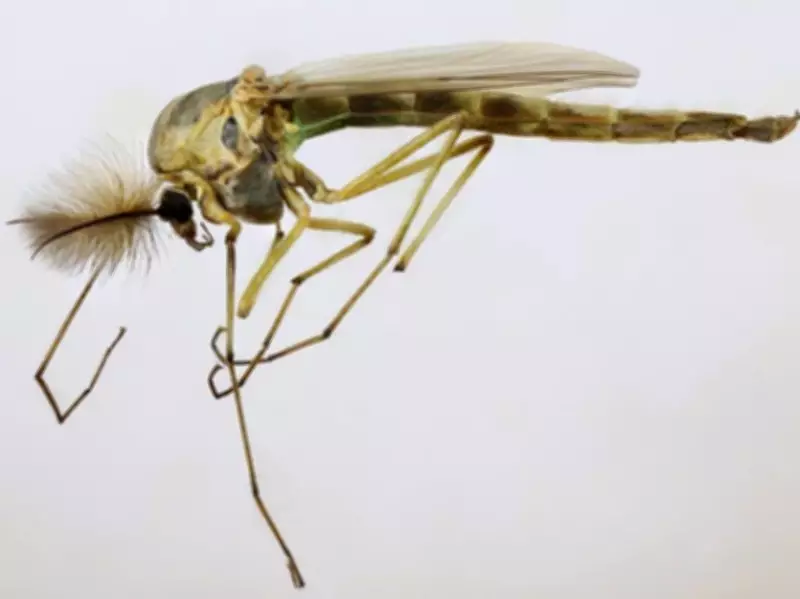
As spring temperatures rise in Toronto, residents near the waterfront and rivers are witnessing the annual emergence of midges. These small, non-biting flies form large swarms for their mating ritual, which can be a nuisance but are harmless to humans.
What Are Midges?
Midges belong to the Chironomidae family and begin life as larvae in lake and river beds, feeding on sediment. After transforming into pupae, they emerge as adults and take to the skies in large swarms. Males typically appear first, waiting for females to join the mating ritual.
According to The Canadian Encyclopedia, non-biting midges are often considered a minor nuisance. Adults of most species live only long enough to mate and lay eggs.

Biting vs. Non-Biting Midges
Biting midges, known as Ceratopogonidae, and gall midges (Cecidomyiidae) are different. Female biting midges feed on humans, mammals, and birds, similar to mosquitoes. They are not easily repelled by chemicals, so leaving the area is the best defense.
Non-biting midges form huge mating swarms in the evenings, sometimes resembling clouds of smoke.
Ecological Importance
Despite being a nuisance, midges play a vital role in the ecosystem by providing food for fish and birds. Ontario has over 800 species of midges, but only a few are found in Toronto.
Tips to Keep Midges Away
- Turn off unnecessary lighting, as midges are attracted to light.
- Use yellow lighting to reduce attraction.
- Ensure window screens are in good condition.
- If encountering a swarm, keep your mouth closed, especially while cycling.
Toronto resident Paul Jones filmed a swarm along the lakefront in Ajax and shared it on Facebook.