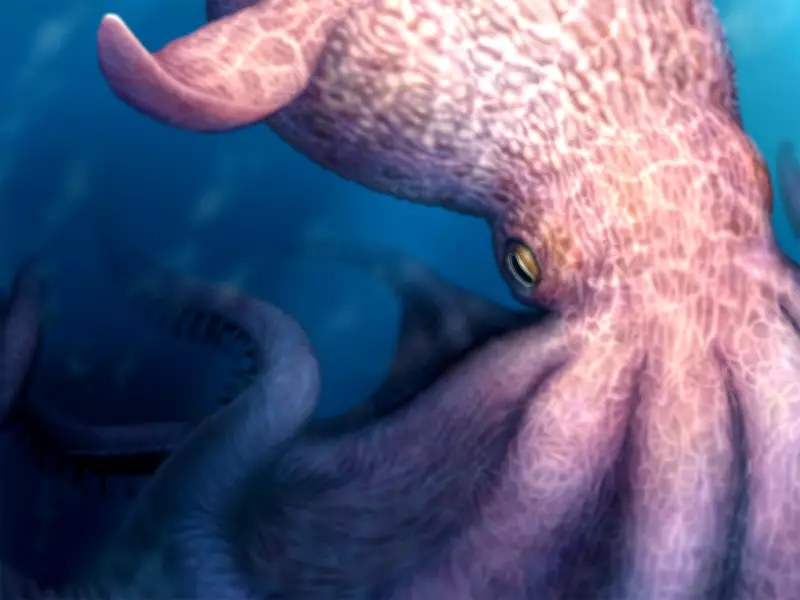
Scientists have uncovered evidence that a colossal octopus, reminiscent of the mythical Kraken, dominated the ancient seas as a top predator during the age of dinosaurs. A study led by Japanese researchers from Hokkaido University suggests that these cephalopods reached astonishing sizes, potentially surpassing even the largest marine reptiles of the time.
Massive Size Revealed Through Fossil Analysis
The research team examined 15 jaw fossils of large octobrachia discovered on Vancouver Island and in Japan, along with 12 additional jaws of finned octopuses unearthed in Japan using a digital fossil-mining method. All specimens date back to the Late Cretaceous period, approximately 100 to 72 million years ago. By analyzing wear patterns on the jaws, the scientists estimated that these creatures could grow up to nearly 20 meters in total length. Professor Yasuhiro Iba, a co-author of the study, stated, "Based on exceptionally well-preserved fossil jaws, we show that these animals reached total lengths of up to nearly 20 metres, which may have surpassed the size of large marine reptiles of the same age."
Aggressive Feeding Strategy
Using artificial intelligence to create visual data sets, the scientists studied the grinding habits of the jaws. They found that in well-grown specimens, up to 10 percent of the jaw tip had been worn away. "This indicates repeated, forceful interactions with their prey, revealing an unexpectedly aggressive feeding strategy," said Iba. The jaws, resembling beaks, were strong enough to break through shell and bone, suggesting that these octopuses were formidable predators with powerful arms capable of capturing large prey.

Challenging Preconceptions About Marine Predators
Traditionally, vertebrates—animals with backbones—have been considered the top predators in marine ecosystems. Invertebrates like octopuses were thought to be small prey during the Mesozoic Era. However, this study provides the first direct evidence that invertebrates could evolve into giant, intelligent apex predators. "Our findings suggest that the earliest octopuses were gigantic predators that occupied the top of the marine food chain in the Cretaceous," Iba explained. The research indicates that powerful jaws and the loss of superficial skeletons were key to becoming huge, intelligent marine predators.
Kraken-Like Creatures of the North Pacific
The study, published in the journal Science, reveals that these kraken-like octopuses were the most prolific predators in the North Pacific Ocean during the Cretaceous period. While several gigantic octopus fossils over two meters in length have been documented from the Mesozoic era, this species is estimated to have ranged from seven to 19 meters in length. The findings challenge long-held assumptions about the dominance of vertebrates in ancient marine ecosystems and open new avenues for understanding the evolution of invertebrates.