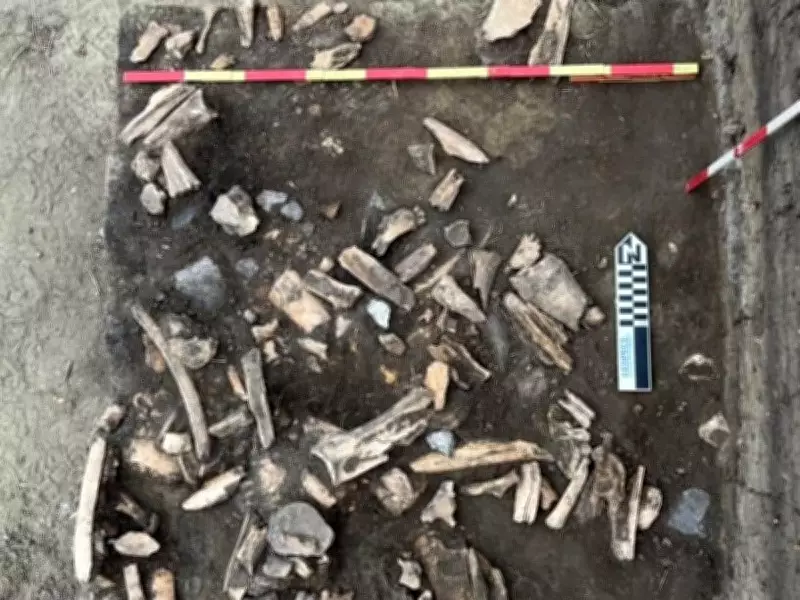
Recent archaeological findings in Moose Jaw's Wakamow Valley are reshaping the understanding of First Nations' life on the Prairies, revealing evidence of plant cultivation long before European contact. The discoveries, presented by archaeologist Alan Korejbo, include stone-lined hearths, bison bones, and well-preserved pottery fragments that can be reassembled into near-complete vessels.
Excavations in Wakamow Valley
In 2024, Korejbo directed excavations at the Garratt and Davies sites, named for former landowners Bill Garratt and Paul Davies. More than 100 shovel tests confirmed a high density of archaeological material, building on discoveries made by Davies in the 1950s. The valley forms part of a broader archaeological landscape, with artifacts spanning at least 12,000 years.
“We found that, yes, there was a huge site underneath in the area where they were doing the construction,” Korejbo said during a presentation at the Moose Jaw Public Library. “This isn’t just a kill site or a butchering site. This is a site where people stayed — families stayed here. Men, women, young and old.”

Pottery and Plant Cultivation
The site, known locally as “The Turn” for the river’s meandering shape, has yielded more than 200,000 artifacts. Pottery radiocarbon dated to around 1095 CE features designs linked to the Blackduck culture, an Indigenous society from the Great Lakes and Boreal Forest region. Korejbo noted that clay pot use often coincides with a shift from hunting and gathering to land cultivation and attachment to a location.
“The pottery may point to connections with groups farther south and east, where horticultural practices were established,” he said. This suggests that knowledge of plant cultivation was shared across regions.
Community Gathering Place
Federation of Sovereign Indigenous Nations Senator Bill Strongarm spoke about Wakamow as a traditional gathering place. “It’s a place where our First Nations got together as they made their way to Cypress Hills … that place has an ample supply of water and game, so that’s where everybody went,” he said.
Excavations at the Garratt Site were part of required assessments tied to a highway slope rehabilitation project. Nearby testing in Tatawaw Park also identified artifacts, reinforcing the valley’s long-standing significance. The findings deepen the story of First Nations' agricultural practices on the Plains, highlighting a sophisticated understanding of plant cultivation long before European arrival.