Mandatory evacuation orders are in effect for residents of three south Seattle suburbs after a critical levee failed following a relentless week of heavy rain. The breach has unleashed significant flooding, transforming neighborhoods into inundated landscapes and prompting urgent rescue efforts.
Teenager's Heroic Rescue Amid Rising Waters
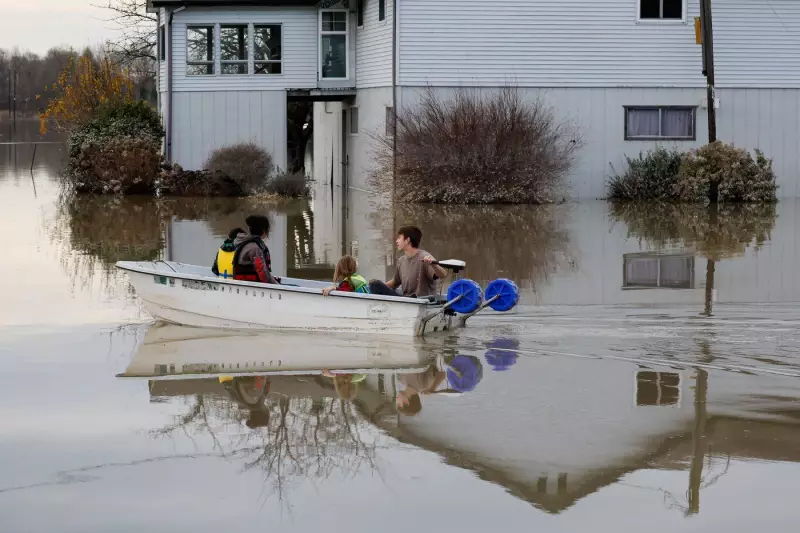
The human impact of the flooding was starkly illustrated on Saturday, December 13, 2025, near Clear Lake, Washington. Carter Johnson, 16, navigated a boat through what was once his family's front yard to transport his five-year-old brother, Milo, and two neighbors to safety. The scene, captured by a photographer for The Seattle Times, shows the boat passing a flooded house, highlighting the sudden and severe nature of the disaster.
Cause and Immediate Response
The flooding crisis was triggered by the failure of a levee, a protective embankment, which could no longer hold back water accumulated from days of intense precipitation. Emergency management officials swiftly issued the evacuation orders for the affected suburbs to ensure resident safety as water levels rose unpredictably. The specific locations under evacuation orders were not detailed in the initial report, but the focus remains on the Clear Lake area.

Broader Context of Severe Weather
This incident in Washington state occurs as multiple regions across North America grapple with severe weather. At the time of the levee failure, weather warnings for blizzards, brutal cold, and flooding were active in six Canadian provinces and two territories, underscoring a widespread pattern of extreme climatic events. The flooding near Seattle serves as a urgent reminder of the vulnerabilities communities face during periods of intense and prolonged rainfall.
Local authorities continue to assess the damage and manage the response, with a primary focus on ensuring all residents are accounted for and safe. The timeline for residents to return to their homes remains uncertain and will depend on repairs to the failed infrastructure and the recession of floodwaters.