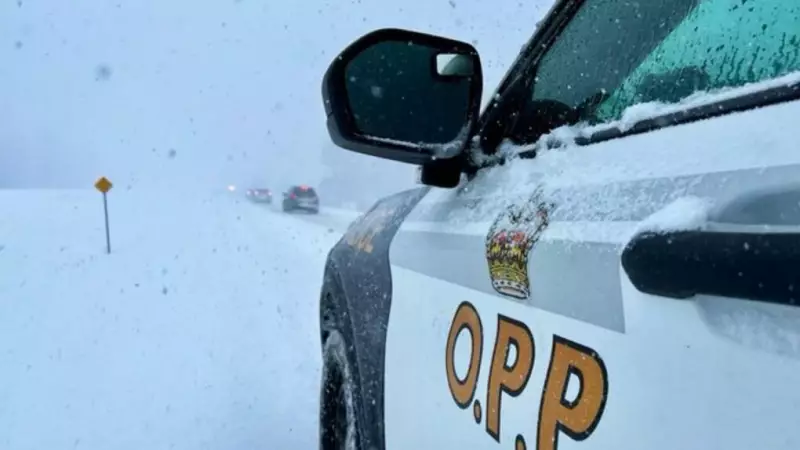
A major highway in Central Ontario has been shut down due to a severe and sudden burst of winter weather. Highway 26 is closed because of an intense band of snow squalls, creating extremely poor visibility and hazardous driving conditions.
Dangerous Conditions Force Road Closure
The closure was implemented on the morning of Thursday, December 4, 2025, as a fast-moving system brought a concentrated line of heavy snow to the area. The squalls are producing localized whiteout conditions, making travel on the highway dangerously unpredictable. Authorities have not provided an estimated time for reopening the route, stating that safety assessments will be ongoing until visibility improves substantially.
Widespread Impact on Transportation and Schools
The ripple effects of this intense weather are being felt across the region. The dangerous conditions have triggered school bus cancellations for several areas. Multiple school boards, prioritizing student safety, have cancelled transportation services as the squalls reduce visibility on secondary roads and rural routes.

This event is part of a broader pattern of active winter weather across Canada. Nationwide, numerous weather advisories are in effect. Forecasters are warning that some parts of Ontario could see significant accumulations, with up to 50 centimetres of snow possible in certain areas from persistent lake-effect snow and passing systems.
Staying Safe During Sudden Winter Storms
Police and transportation officials are urging drivers to avoid unnecessary travel in the affected regions. If travel is essential, motorists are advised to:
- Check road conditions and closures before departing.
- Reduce speed significantly and increase following distance.
- Ensure their vehicle is equipped with a winter emergency kit.
- Use headlights on low beam in poor visibility.
Environment Canada emphasizes that snow squalls can reduce visibility to near zero in a matter of minutes, creating sudden and life-threatening conditions for motorists. Residents are encouraged to monitor local forecasts for updates on the duration and intensity of the squall activity.