Extreme Weather Events Drive Billions in Insured Losses Across Canada
New insurance sector data reveals that extreme weather events, including devastating wildfires, powerful winter storms, and relentless atmospheric rivers, caused more than $2.4 billion in insured losses across Canada last year. This staggering figure represents a significant escalation in climate-related financial impacts, with the Insurance Bureau of Canada reporting that 2025 marked the tenth costliest year on record for insured losses nationwide.
Dramatic Increase in Climate-Related Insurance Costs
According to Celyeste Power, president and CEO of the Insurance Bureau of Canada, the financial impact of extreme weather has undergone a dramatic transformation over recent decades. "Two decades ago, insured losses seldom surpassed $500 million in a year. Today, annual costs exceeding $1 billion have become the norm," Power emphasized. The data reveals an even more concerning trend: the total amount of insured losses has nearly tripled from one decade to the next, rising from $14 billion in the ten years before 2015 to $37 billion over the past decade.
Major Weather Events That Shaped 2025
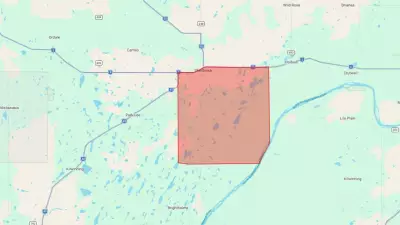
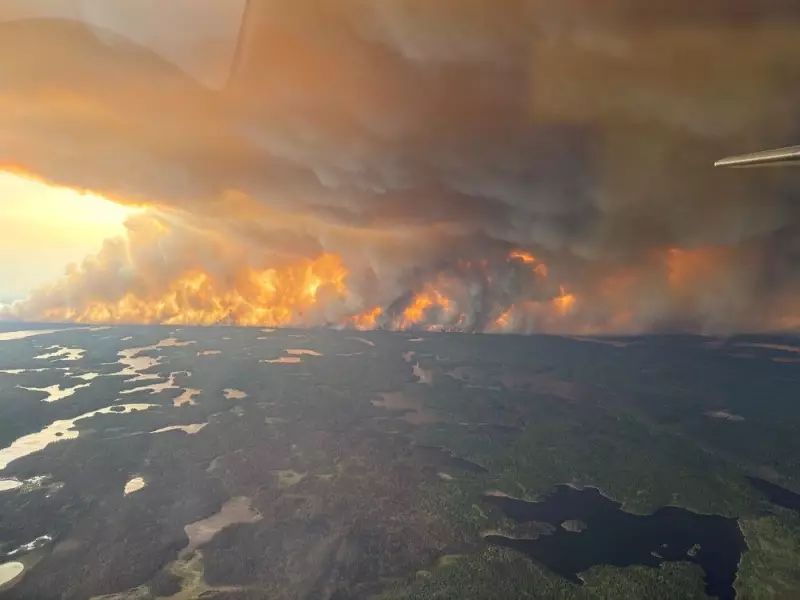
The most significant single weather event of 2025 was a severe ice storm that struck parts of Ontario and Quebec in late March. This destructive storm flooded numerous homes, downed power lines across affected regions, and damaged countless vehicles, resulting in $490 million in total insured losses. Following closely were the devastating wildfires that swept across Western Canada, with the most costly blaze devastating the community of Flin Flon and surrounding areas along the Saskatchewan-Manitoba border. This catastrophic fire forced the evacuation of nearly 40,000 residents from the mining city and resulted in approximately $250 million in insured losses.

Atmospheric Rivers Continue to Pound British Columbia
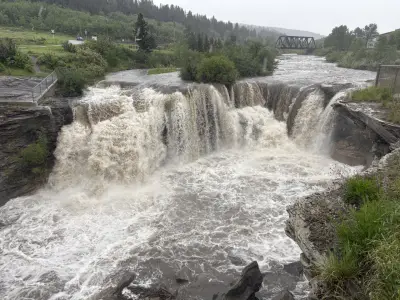
In Western Canada, British Columbia continues to experience the punishing effects of atmospheric rivers, which the National Oceanic and Atmospheric Administration defines as "relatively long, narrow regions in the atmosphere that transport most of the water vapour outside of the tropics." In early December 2025, these atmospheric rivers pummelled the Lower Mainland area, causing severe flooding throughout the Fraser Valley and resulting in nearly $90 million in insured losses. Tragically, these weather events claimed two lives: a woman in Chilliwack who was struck by a falling branch and a man in Snohomish, Washington, who drowned in his vehicle.
Rising Premiums and Insurance Accessibility Concerns
Beyond the direct impacts on Canadians' health, vehicles, and homes, these escalating disasters are hitting household budgets through rising insurance premiums. The insurance industry's financial data reveals that in 2024, which remains the most costly year on record with $9.4 billion in insured losses, Canadian property and casualty insurers reported a combined profit exceeding $4 billion. This profitability comes alongside growing concerns about insurance accessibility, particularly in flood-prone or high-risk areas where insurers may decline to offer coverage.
Without adequate insurance protection, homeowners face significant financial vulnerability, including potential inability to secure mortgages and risk of losing everything when floods or other disasters strike. In response to these challenges, the federal government is developing a comprehensive flood hazard mapping program designed to create detailed maps of higher-risk areas, providing Canadians with crucial information to make informed decisions about their properties and insurance needs.
The escalating pattern of extreme weather events and their substantial financial consequences underscores the growing economic impact of climate change across Canada, with insurance costs serving as a clear indicator of this troubling trend that shows no signs of abating in the coming years.