On a Tuesday in mid-January, the weather in southern Alberta felt more like a gift than a given. The sun shone brightly on a landscape largely stripped of its winter white, with calm air and even bees buzzing around. For a journalist flying a drone near a partially frozen lake, the scene prompted a mix of delight and a touch of guilt. It was January 13, 2026, and the thermometer read a balmy 13°C.
Familiar Prairie Scenes Evoke Childhood Memories
The journey began east of High River, under a canopy of classic chinook clouds. While the distant mountains and foothills wore snow, the ground near Herronton was mostly bare. Only remnants lingered in canola stubble and roadside ditches. This near-snowless vista felt deeply familiar to the writer, whose roots are firmly planted in Alberta's open country.
Having grown up in Gleichen and later Milk River, winters were never a guarantee of endless snow cover. Memories include as many brown Christmases as white ones, and outdoor hockey games where pucks often disappeared into muddy corners. Snow would arrive, but chinook winds or sunny spells routinely swept it away. Driving through this landscape in January 2026 felt like a return to those prairie winters of memory.

A Palette of Peach Skies and Icy Details
The atmospheric conditions painted the southern horizon with a persistent, peachy glow—a signature effect of winter light scattering through moisture and dust. This soft light bathed the next stop: McGregor Lake, near Milo.
Here, the scene was a study in contrasts. The air was a warm 10°C and remarkably still, allowing voices from ice fishers nearly a kilometre away to carry clearly across the ice. Huts and tents dotted the lake surface, where anglers pursued pike and walleye beneath. Meanwhile, the shore told a different story. Ice pushed up against the dam had cracked into fascinating, intricate patterns, visible in detail from an aerial drone perspective. Along a narrow beach, a mosaic of winter detritus lay frozen in place: feathers, colourful pebbles, snail shells, and blades of grass.
The Enduring Cycle of Chinook Weather
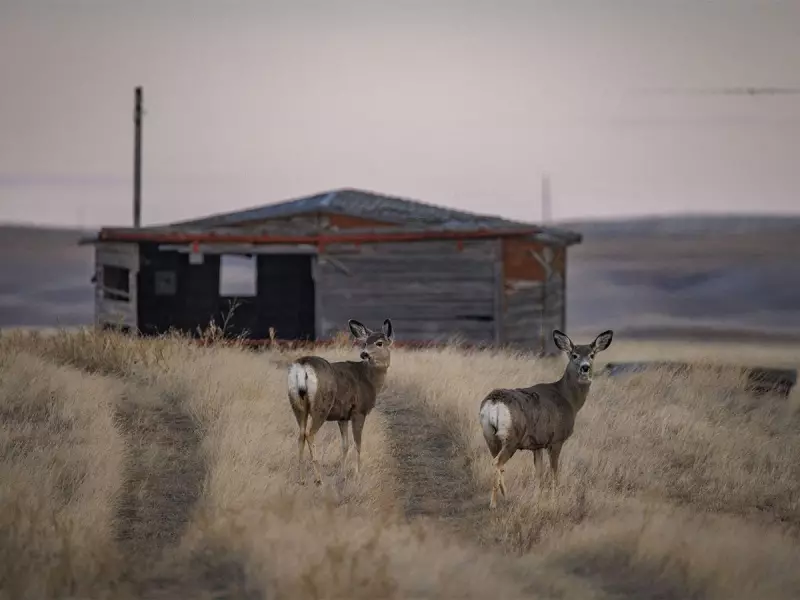
The day concluded near Little Bow Provincial Park, east of Champion, as the last light silhouetted a group of mule deer pausing before entering a field. The entire expedition underscored the powerful and defining role of chinook winds on the southern Alberta experience. This weather phenomenon, which can erase winter's grip in a matter of hours, shapes not just the landscape but also the collective memory of those who live there.
While unseasonably warm January days can spark conversations about climate trends, this particular day primarily served as a vivid reminder of the region's inherent climatic variability. The brown fields, the open water, and the warm breeze were less an anomaly and more a characteristic feature of a prairie winter, deeply woven into the personal history and present reality of Albertans under the vast, changing sky.