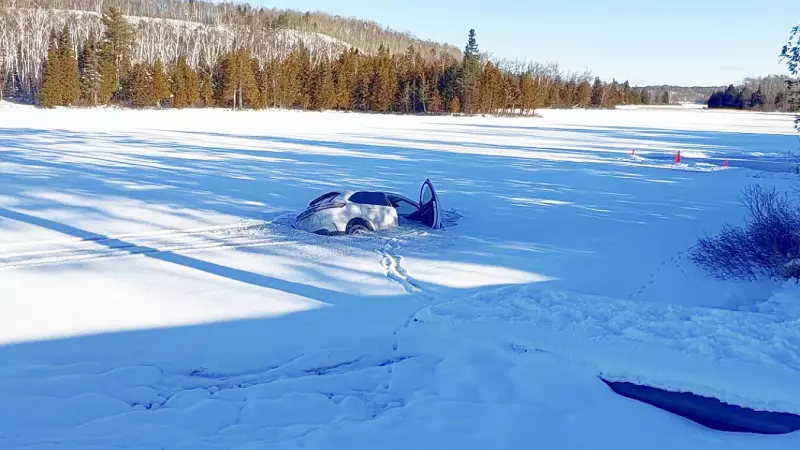
A dangerous winter incident served as a stark reminder of the perils of early-season ice this past weekend in the Greater Sudbury community of Hanmer. Local authorities confirmed that a car broke through the frozen surface of Onawatin Lake, requiring a recovery operation.
Details of the Onawatin Lake Incident
According to the Greater Sudbury Police, the alarming event occurred on Friday, December 13, 2025. The vehicle, whose make and model were not immediately released, was traveling on the lake's ice cover when it gave way, plunging the car into the frigid waters. The incident prompted an emergency response, and the vehicle was successfully pulled from the lake last weekend. No injuries were reported in connection with the event, though police have not disclosed the circumstances that led the driver onto the ice or if any charges will be laid.
Authorities Issue Winter Safety Warning
This incident underscores the critical importance of ice safety, particularly during the early and late periods of the winter season. While many lakes in Northern Ontario begin to freeze in December, ice thickness can be highly variable and dangerously inconsistent. Public safety officials consistently warn that no ice should ever be considered 100% safe. Factors such as underwater currents, shifting temperatures, snow cover, and inflows from streams can create weak spots even in seemingly solid ice.

Residents are urged to avoid driving any vehicles onto frozen bodies of water unless the ice has been officially checked and declared safe by local authorities, a rarity for most recreational lakes. For foot travel, experts recommend a minimum of four inches of clear, solid ice, while snowmobiles require at least five inches, and cars or light trucks need a minimum of eight to twelve inches—thickness that is seldom achieved uniformly in mid-December.
A Community Reminder as Winter Deepens
The successful recovery of the vehicle from Onawatin Lake without injury is a fortunate outcome. However, the event acts as a crucial community alert as the region settles into the winter months. Similar incidents in the past across Canada have had tragic consequences. Safety advocates recommend sticking to designated roads and trails, and if recreational ice activity is planned, to always:
- Check official ice thickness reports if available.
- Travel with a companion and inform others of your plans.
- Carry ice picks and a safety rope.
- Be extremely cautious around areas with moving water, such as inlets and outlets.
The Greater Sudbury Police have not provided further updates on the investigation into the cause of the December 13th incident, but the visual of a car being extracted from a frozen lake serves as a powerful, cautionary image for all Northern Ontario residents.