DNA Traces Found in Cave Sediments
A groundbreaking study published in the journal Science has demonstrated that human DNA can persist in cave sediments for tens of thousands of years, even in the absence of skeletal remains. Researchers from the Max Planck Institute for Evolutionary Anthropology analyzed sediment samples from seven caves across Europe and Asia, successfully identifying DNA from Neanderthals and Denisovans, as well as early modern humans.
Methodology and Key Findings
The team collected 85 sediment samples from caves including Spain's Altamira, France's Chauvet, and Russia's Denisova Cave. They used advanced techniques to extract and sequence mitochondrial DNA, which is more abundant and durable than nuclear DNA. The oldest DNA detected came from a layer in Denisova Cave dated to approximately 50,000 years ago, corresponding to Neanderthal occupation.
"This method allows us to identify which hominins were present at a site without needing to find bones or tools," said lead author Dr. Matthias Meyer, a geneticist at the Max Planck Institute. "It opens up new possibilities for studying human evolution across vast landscapes."

Implications for Archaeology
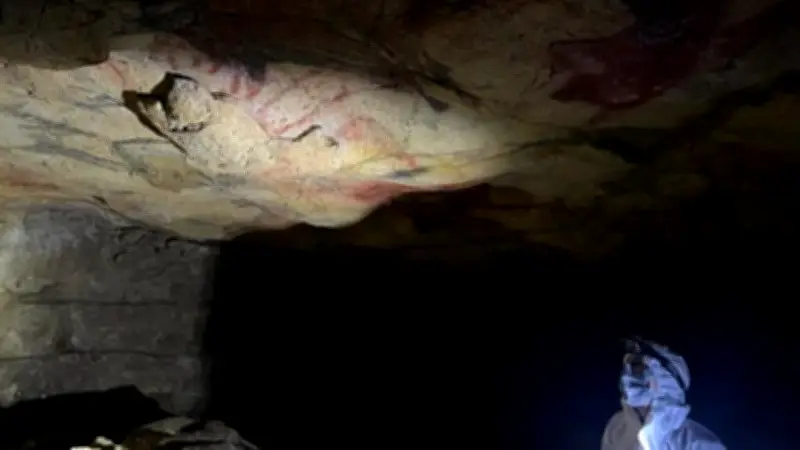
The technique could revolutionize archaeology by enabling scientists to map the presence of ancient humans across regions where bone preservation is poor. For instance, the study identified Neanderthal DNA in Altamira Cave, known for its prehistoric paintings, suggesting a deeper connection between symbolic art and Neanderthal activity.
Co-author Prof. Svante Pääbo, a Nobel laureate in physiology, emphasized the non-invasive nature of the method. "We can now explore the genetic history of a site by simply analyzing the dirt on the floor, leaving the archaeological layers intact for future research."
Limitations and Future Research
While powerful, the technique has limitations. It cannot distinguish between individuals or provide information about sex or health. Additionally, contamination from modern human DNA remains a challenge, requiring strict laboratory protocols. The team is now working on methods to extract nuclear DNA, which could offer more detailed genetic insights.
"This is just the beginning," said Dr. Meyer. "We plan to apply this approach to thousands of caves worldwide, potentially rewriting the timeline of human migration and interaction."