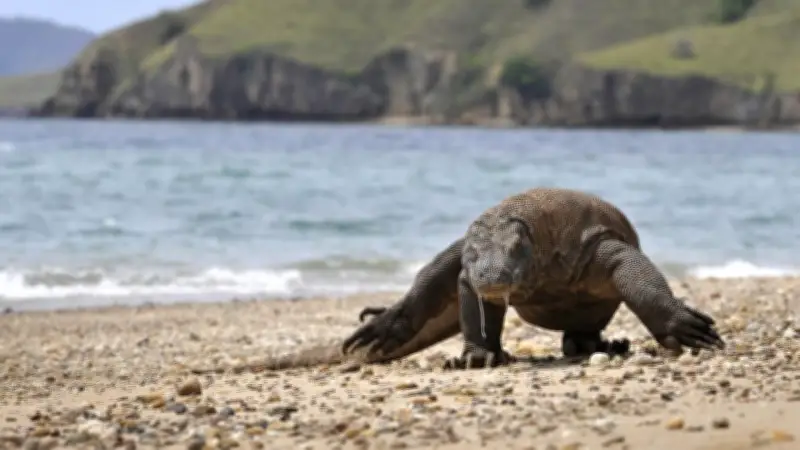
New research suggests that hobbit-like humans, known scientifically as Homo floresiensis, may have scavenged leftovers from Komodo dragon kills to survive on the Indonesian island of Flores. The study, published in the journal Nature Ecology & Evolution, provides fresh insights into the dietary habits and survival strategies of these small-statured early hominins, who lived on Flores until around 50,000 years ago.
Evidence from Fossil Sites
Researchers analyzed fossil assemblages from the Liang Bua cave on Flores, where remains of Homo floresiensis and Komodo dragons have been found alongside cut-marked bones. The team identified stone tool marks on bones that suggest hominins accessed carcasses after predators like Komodo dragons had consumed the meat. According to lead author Dr. Gerrit van den Bergh from the University of Wollongong, the marks indicate that the hobbits were not the primary hunters but rather scavenged remains left by the giant lizards.
“The cut marks are consistent with scraping meat off bones that were already partially defleshed by Komodo dragons,” van den Bergh said. “This suggests a scavenging niche, where Homo floresiensis relied on the leftovers of these apex predators.” The study also found that Komodo dragon teeth marks overlapped with stone tool cut marks, confirming the sequence of consumption.

Implications for Hominin Survival
The findings challenge previous assumptions that Homo floresiensis actively hunted large prey. Instead, they highlight the adaptability of early humans in resource-scarce environments. “Scavenging from dangerous predators like Komodo dragons would have required careful timing and risk assessment,” said co-author Dr. Karen Baab from Midwestern University. “It shows that these small-brained hominins were capable of complex behavioral strategies.”
The study also notes that Komodo dragons, which can grow up to three meters long, were likely a dominant threat on Flores. However, the hobbits may have exploited their kills during the dragons' resting periods or after they had abandoned the carcass. This behavior is observed in some modern human populations that scavenge from large carnivores.
Broader Context of Human Evolution
The research adds to a growing body of evidence that early hominins were opportunistic omnivores. Similar scavenging behaviors have been proposed for other ancient human species, including Homo habilis and Paranthropus boisei. However, the Flores example is unique due to the presence of a giant reptilian predator. “This is a rare glimpse into the ecological interactions between hominins and large reptiles,” van den Bergh noted. “It underscores the diversity of survival strategies in human evolution.”
The team plans to conduct further excavations at Liang Bua to uncover more evidence of hobbit diet and behavior. They also aim to model the risk-reward dynamics of scavenging from Komodo dragons to better understand the cognitive demands involved.