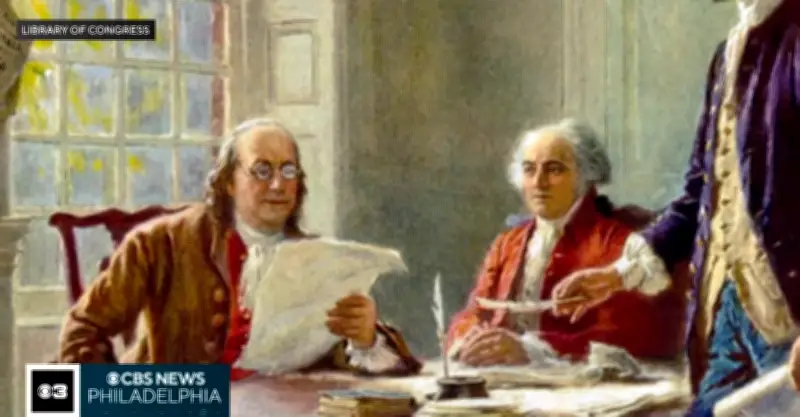
Research conducted by America's Founding Fathers continues to play a pivotal role in helping scientists understand how the Earth's climate is changing. A new analysis highlights how Benjamin Franklin's 18th-century observations and ideas have provided a foundation for modern climate science.
Franklin's Legacy in Climate Science
Benjamin Franklin, best known as a Founding Father and inventor, also made significant contributions to understanding weather and climate. His detailed records of Gulf Stream currents, weather patterns, and atmospheric conditions have become invaluable data points for contemporary researchers.
Scientists today use Franklin's meticulous notes to track long-term changes in ocean currents and temperature patterns. His observations of the Gulf Stream, first mapped in 1770, help modern oceanographers measure how warming waters affect this critical current system.

Historical Data Meets Modern Technology
Franklin's systematic approach to recording weather phenomena established early methods that resemble modern climate monitoring. His documentation of storm tracks, wind patterns, and temperature variations provides a baseline for comparing historical and current climate conditions.
Researchers have digitized Franklin's logs and integrated them with satellite data and computer models. This combination allows scientists to see how climate patterns have shifted over centuries, offering insights into the rate and magnitude of current changes.
Broader Impact of Founding Fathers' Research
Franklin is not alone among Founding Fathers whose work aids climate science. Thomas Jefferson's detailed weather journals and agricultural records also contribute to understanding historical climate variability. These early American scientists laid groundwork for environmental monitoring that continues today.
Their legacy underscores the importance of long-term data collection. Without these historical records, scientists would have fewer reference points to distinguish natural climate variability from human-caused changes.
As climate change accelerates, researchers increasingly rely on historical data to validate models and predict future scenarios. Franklin's contributions remind us that scientific progress often builds on insights from previous generations.
This story was originally published by CNN and is republished here as part of a content sharing agreement.