A new study from the University of British Columbia reveals that millions of amphibians and reptiles, including threatened species, are being relocated to accommodate development projects in the province, yet there are no requirements to monitor whether they survive the move.
Study Highlights Lack of Monitoring
The research, published in the Journal of Wildlife Management, found that more than five million frogs and salamanders from 28 species were moved in British Columbia due to construction activities between 2019 and 2022. This is the first study to track the large-scale movement of amphibians and reptiles for infrastructure projects such as pipelines, culverts, and other developments, according to UBC.
Researchers note that the practice, known as mitigation translocation, has become routine, but there are no regulations to check on the survival of some of the most threatened species after relocation.

Western Toad Among Most Affected
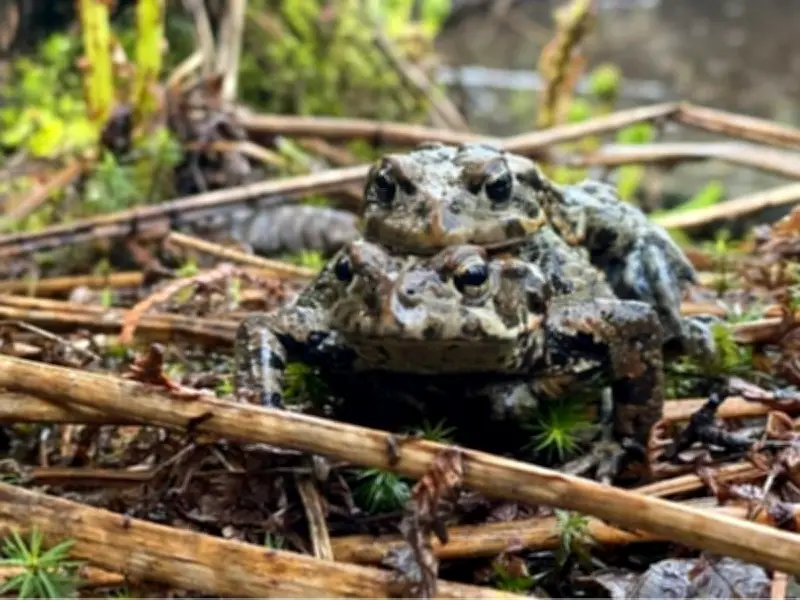
The Western Toad, considered a threatened species across North America, was the most commonly moved amphibian in B.C. due to construction. In the province, it is listed as a blue-listed species of conservation concern, while in the Northwest Territories it is officially threatened.
Despite growing global concerns about the effectiveness of mitigation translocations in offsetting development impacts, the practice has gained popularity. Developers must obtain a provincial permit and move amphibians and reptiles off-site before breaking ground, but no further action is required.
Reasons for Translocation Failure
The study indicates that translocation efforts often fail due to poor release-site quality, inadequate habitat connectivity or habitat to support all life stages, overcrowding, and increased competition from releasing animals into existing populations. The physiological stress of capture and relocation can also lead to illness or mortality.
“With no legal requirement to monitor outcomes, we have limited evidence whether these efforts work,” said Megan Winand, lead author and recent UBC master of science graduate.
Call for Habitat Avoidance
The authors advocate for habitat avoidance as the first line of protection, such as rerouting infrastructure or redesigning crossings to prevent impact. Amphibians and reptiles play crucial roles in ecosystems by controlling insect populations and serving as prey for birds, mammals, and fish.
“Translocation should be a last resort — something you do when avoidance isn’t possible,” said senior author Tara Martin, a professor and Liber Ero Chair in UBC’s faculty of forestry and environmental stewardship. “Instead, it’s become routine. We are making consequential choices for millions of animals without knowing whether they survive.”
Postmedia has reached out to the B.C. government for more information on why developers are not required to track the survival of these threatened species after relocation. More details are expected to follow.