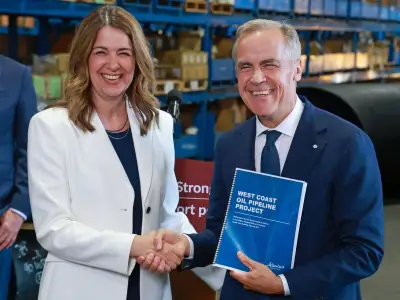
The governments of Canada and Alberta recently announced they will work together to advance consideration of Alberta’s proposal for a new oil pipeline from Bruderheim, just northeast of Edmonton, to the southwest coast of British Columbia. Intended to be a joint venture among government, industry and Indigenous sponsors, the southern-route pipeline is an alternative to using British Columbia’s northern coast and its much shorter route to Asian markets.
Political influence on route selection
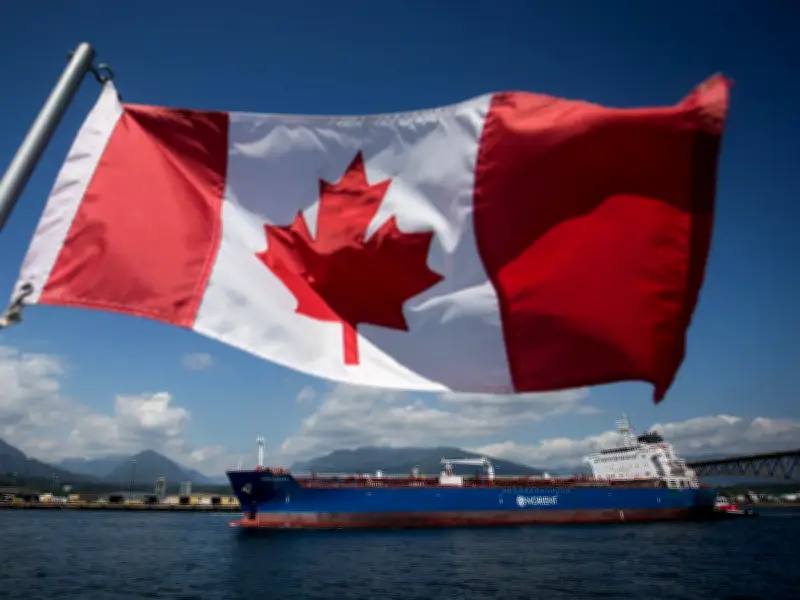
The choice of a southern route was influenced, if not dictated, by federal government actions. Under the authority of the Oil Tanker Moratorium Act passed in 2019, Ottawa legally entrenched a permanent prohibition on oil tankers carrying more than 12,500 metric tons of crude oil from loading, unloading or even stopping at ports along British Columbia’s northern coast. B.C. Premier David Eby insists the ban continue and the Carney government doesn’t want a political battle with him or with members of its own parliamentary caucus.
So the ban will stay — even though there has never been a scientific rationale for it. Environmentalists and some Indigenous groups claim that moving ships into and out of northern B.C. ports poses an unacceptably high risk of spills that would have lasting environmental and social consequences. But such claims ignore: oil tankers’ essentially stellar safety record worldwide over the past five decades; the actual data on oil spills; comprehensive regulation to prevent and respond to any spills that might occur; and the outsized capacity of the Canadian Coast Guard and industry to deal with them.

Dramatic reduction in oil spills
Arguments for banning tankers rest on fears conditions have not changed since 1989, when there was a large spill from the supertanker Exxon Valdez after it ran aground off the coast of Alaska. More than three decades later, however, conditions are entirely different. Though the global volume of oil moved by tanker has increased 10-fold since the 1970s, the volume of oil spills is down by 95 per cent.
The largest spill ever recorded on Canada’s West Coast was caused, not by an oil tanker, but by the sinking of the ferry M/V Queen of the North in 2006. The spill, 240 tonnes, was roughly equal to the volume of two backyard swimming pools, or one ten-thousandth of the oil carried by a supertanker. According to Clear Seas, a Canadian not-for-profit, the current average of vessel traffic offshore of B.C. is 3,186 per year, a total that could rise to about 5,300 vessels per year, even without a new oil pipeline.
Stringent safety regulations in place
Canada has one of the world’s most demanding systems for regulating the safety of marine shipping, and especially oil tankers. It governs every aspect of oil spill prevention, preparedness, response and remediation, and is fully aligned with the most demanding international standards, as established by the International Maritime Organization. Today all oil tankers operating in Canada are double-hulled — the Exxon Valdez was not — and are subject to regulatory requirements and industry standards that have drastically reduced the number and volume of oil spills, as well as the harm they do.