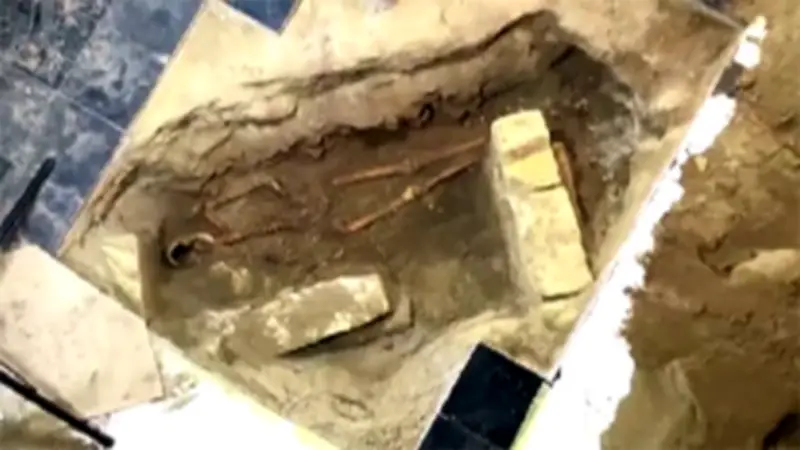
A skeleton discovered in a Dutch church could belong to d'Artagnan, the French soldier who inspired Alexandre Dumas's novel The Three Musketeers, but researchers caution that the identification is not definitive.
Discovery in a Dutch Church
The remains were found during an archaeological excavation at a church in the Netherlands. Researchers have been analyzing the skeleton to determine if it matches historical records of d'Artagnan, who died in battle in 1673.
According to the study, the skeleton shows signs of combat injuries consistent with d'Artagnan's known death during the Siege of Maastricht. However, DNA analysis and other forensic techniques have not yet confirmed the identity.

Uncertain Identification
“We cannot say with certainty that these are the bones of d'Artagnan,” said lead researcher Dr. Anne van der Meijden. “The evidence is suggestive but not conclusive.” The team plans to conduct further tests, including carbon dating and comparison with historical descriptions.
d'Artagnan, whose real name was Charles de Batz-Castelmore d'Artagnan, served as a captain in the Musketeers of the Guard under King Louis XIV. His exploits were romanticized in Dumas's 1844 novel.
Historical Significance
The discovery has sparked interest in both historical and literary circles. If confirmed, it would be a rare find linking a fictional character to a real historical figure. The skeleton is currently being preserved for further study.