The Ontario government has announced an immediate ban on Chinese-made drones for use by provincial ministries and law enforcement agencies, including the Ontario Provincial Police. The decision, driven by concerns over data security and potential interference from foreign adversaries, marks a significant shift in procurement policy.
Security Concerns Prompt Action
Public and Business Service Delivery and Procurement Minister Stephen Crawford announced the restriction on May 20, emphasizing the need to protect Ontario's data and safeguard against bad actors. Under Chinese law, corporations are required to share data with the government, even if stored overseas, raising alarms about the use of drones from Shenzhen-based DJI, the world's leading drone manufacturer and a dominant supplier in Canada.
Most police and government agencies across Canada currently use DJI drones, which are reliable and affordable compared to Western alternatives. However, the new policy aims to reduce reliance on Chinese technology and bolster the domestic drone industry.

Taiwanese Manufacturer Steps Up
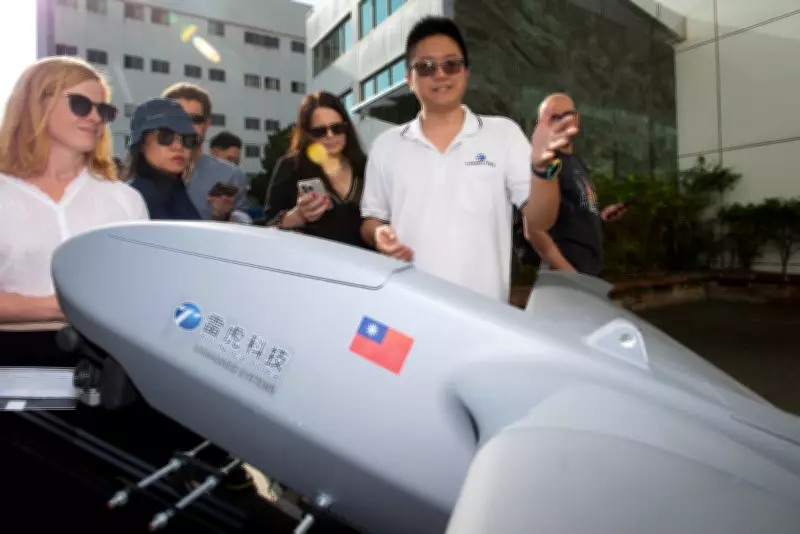
Thunder Tiger Group, a Taiwanese military drone manufacturer, is working to establish a supply chain free of Chinese components. Allan Chi, a company representative, stated that achieving 99% non-Chinese parts is a goal, though challenges remain in sourcing magnets, rare-earth metals, and battery cells, which are predominantly produced in China.
“It's more expensive, but it all depends on what the customer can accept,” Chi said. “Not a lot of customers can accept those higher prices; they value things that are cheap and affordable.” Thunder Tiger's Overkill FPV drone recently became the first Asian-constructed drone listed on the U.S. Department of Defence's Blue UAS cleared list, a certification that requires the absence of Chinese-sourced parts.
Geopolitical Urgency
Taiwan faces an existential threat from China, which considers the island a renegade province under its One China Policy. This urgency has driven Thunder Tiger to pivot from consumer products to military-grade autonomous vehicles, including seagoing drones designed for swarm attacks against enemy vessels.
Lessons from Ukraine's successful use of FPV attack drones have influenced Taiwan's strategy. “We've learned a lot from Ukraine,” Chi said. “That's where people noticed drones being used for asymmetrical warfare, where you don't need boots on the ground to win wars.” Thunder Tiger's Papa-Delta UAV, based on Iran's Shahed 136, is a low-cost, long-range attack drone capable of striking targets in China from Taiwan.
Cost vs. Risk
The ban highlights the tension between cost and security. While Chinese drones are cheaper, the risk of data compromise and geopolitical leverage is deemed unacceptable. Ontario's move is part of a broader trend among Western nations to de-risk critical supply chains, particularly in technology sectors with national security implications.
The transition to non-Chinese alternatives will likely increase costs for government agencies, but proponents argue that the long-term benefits of security and domestic industry growth outweigh the initial expenses. As Thunder Tiger and other manufacturers scale up production, the hope is that prices will become more competitive.