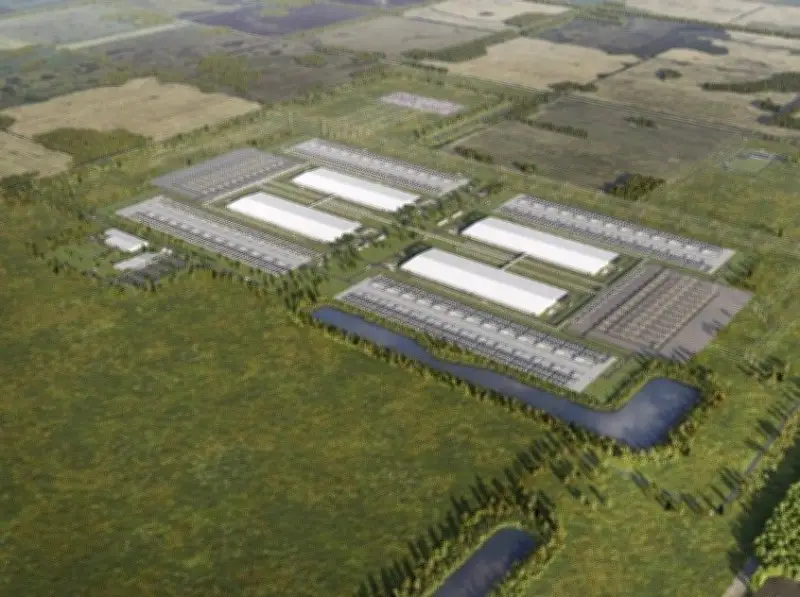
Meta and Alberta Premier Danielle Smith are defending the company's $13-billion hyperscale data centre planned for Sturgeon County, about 30 to 35 km north of Edmonton, after environmental concerns and a bacterial contamination incident in Wyoming surfaced. The project, announced this week, has received warm support from local leaders, but critics have raised questions about its environmental impact and energy use.
Bacteria Incident in Wyoming
Construction on a Meta data centre in Cheyenne, Wyoming, was halted after Cupriavidus gilardii, a naturally-occurring bacteria, was found in wastewater from the site, traced to a Meta contractor. The incident has been contained with no current positive tests, according to Meta vice president of data centre strategy and development Gary Demasi. “One of our contractors there was asked about potential bacterial contamination. It was actually into the wastewater system in the community, and I think there was an association back to the contractor that works for Meta,” Demasi told Postmedia on Friday. He added that Meta is cooperating fully with investigations and working with the contractor to provide data to the community. “But that’s a reflection of the fact that we are a very responsible corporate citizen, and so we’re cooperating as much as we can to help investigate that situation and rectify it,” Demasi said.
Premier Smith Defends Project
On Saturday, Premier Danielle Smith defended the Meta project on CHED radio's Your Province, Your Premier program, after the Pembina Institute criticized the plan. The institute’s electricity program director David Pickup argued that Prime Minister Mark Carney’s Liberal government ambition to triple LNG exports in a decade could drive up energy costs in Alberta and lock in demand for natural gas under the province's BYOG (Bring Your Own Generation) rules for data centres. “Developers like Meta are effectively forced to choose gas-fired generation, rather than allowing them to choose a combination of technologies to power their operations,” Pickup said. Smith responded that the Pembina Institute has long tried to shut down Alberta's fossil fuel industry, along with the NDP and former Prime Minister Justin Trudeau. “Finally, after 18 months, we’ve turned the page on that kind of attitude that has created a lot of division in Alberta and a lot of division in the country. So I think folks need to understand that what this is doing is it’s turning our natural gas into a digital refinery. Everyone has always said, ‘Why don’t we do more value-added close to home? Why don’t we upgrade our resources locally?’” Smith said.

Local Support and Economic Impact
The data centre, located in a heavy industrial zone in Sturgeon County, has garnered local support. The municipality has backed the plan, with leaders emphasizing the economic benefits. Demasi highlighted Meta's commitment to being a responsible corporate citizen, including addressing environmental concerns. The project is expected to create jobs and boost the local economy, though critics worry about water usage and energy demands. The Pembina Institute has called for more stringent regulations on data centre energy use, but Smith and Meta maintain that the project will bring value-added processing of natural gas, aligning with Alberta's economic goals.