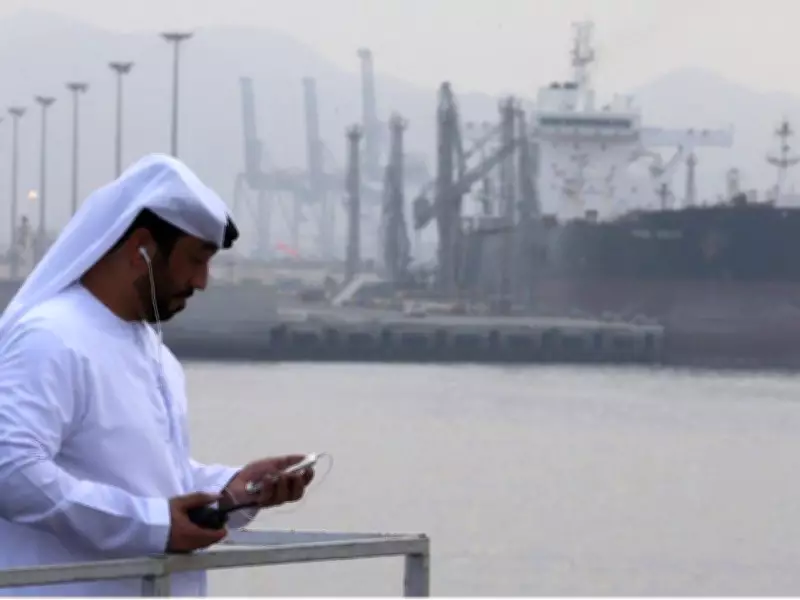
The United Arab Emirates has announced its withdrawal from the Organization of Petroleum Exporting Countries, effective May 1. This strategic decision by the major oil producer marks a significant shift in global energy dynamics.
A Missed Opportunity for Reflection
With the global and continental geopolitical storm confronting Canadians on a near-daily basis, many might understandably be inclined to let this headline pass without further reflection. That would be a missed opportunity.
The changes happening in the UAE, OPEC, and the oil market more broadly are a window into a future that will profoundly affect the Canadian energy sector and economy, well after the current U.S.-Iran confrontation in the Strait of Hormuz ends.

Common Ground Between Canada and the UAE
Despite the profound differences in geography, government, and geopolitical position, Canada and the UAE have more in common than meets the eye, at least when it comes to energy.
Canada and the UAE are among a handful of upstream oil markets that are significantly expanding production. The UAE's plans to grow its production by nearly 50 percent are the key reason for its tension with OPEC, particularly Saudi Arabia. OPEC's core mission is to coordinate production policies among its members in response to market conditions. That has rarely been a seamless process, due to conflicting national-level objectives, including the UAE's current appetite to accelerate development of its immense oil reserves.
Alberta's Ambitions
Alberta Premier Danielle Smith also aspires to grow oil production to eight million barrels per day, nearly double today's production. This is not just an Alberta ambition. Prime Minister Mark Carney supports more oil exports to Asia and has talked about growing Canada's liquefied natural gas exports to 100 million tonnes by 2040, six times today's levels.
Despite the private sector-led nature of our oil sector, changes in OPEC matter a great deal to Canada. The UAE may be leaving OPEC, but will likely still coordinate with the Saudis when needed. This will be similar to the OPEC+ arrangement established in 2015, when Russia agreed to coordinate on production policy without formally joining OPEC.
Lessons from the Past
The shared motivation then was taking market share back from fast-growing U.S. shale and Canadian oilsands production. Through a series of production increases, the OPEC+ strategy worked, for a time. During this period, investment in oil and gas in Alberta plunged dramatically.
Now, OPEC coordination will be more complicated. The UAE will not be bound by OPEC solidarity. Canada, the U.S., Russia, Saudi Arabia, and the UAE are the world's big five oil producers. They are the countries that will shape the trajectory of global oil supply, with each pursuing its own interests.
A Unique Position for Canada and the UAE
Here is the second common thread between Canada and the UAE. In a world divided between petrostates (U.S., Russia, Saudi Arabia) and electrostates (China and the European Union, most notably), neither Canada nor the UAE has to choose between those two paths. Both nations can leverage their energy resources while transitioning to a lower-carbon future, carving new paths in a post-OPEC world.