The Calgary Stampede, rooted in agriculture for over a century, is launching a four-year strategy to educate the public about food production and security. CEO Joel Cowley emphasizes the organization's role in bridging the gap between urban populations and agriculture.
Historical Roots in Agriculture
The Stampede originated as the Calgary and District Agricultural Society, the oldest continuously operating agricultural society in Alberta. Its first fair was held in 1886, and the event has been held annually since, except for cancellations due to economic hardship and the COVID-19 pandemic in 2020.
“We’ve been on our current location hosting an agricultural fair since 1889, and so that’s special, because the city grew up around us,” Cowley said in an interview with Postmedia.

Urban Shift and Agricultural Education
Alberta's population has become increasingly urban. Statistics Canada estimated the province's population at 5,057,077 as of April 1, with Calgary at about 1.6 million and Edmonton at 1.2 million—roughly 55% of Albertans living in these two cities. In 1921, only 21% of Alberta's 588,500 residents lived in Calgary (63,305) and Edmonton (58,821).
With fewer people living on farms, the Stampede sees an opportunity to educate urbanites about agriculture. “When you think about national security, obviously you think about your defence, but you also need to think about food and food security,” Cowley said. “A nation that can’t feed or defend itself is in trouble, and so people need to have an appreciation for agriculture and its importance.”
Global Food Demand and Local Support
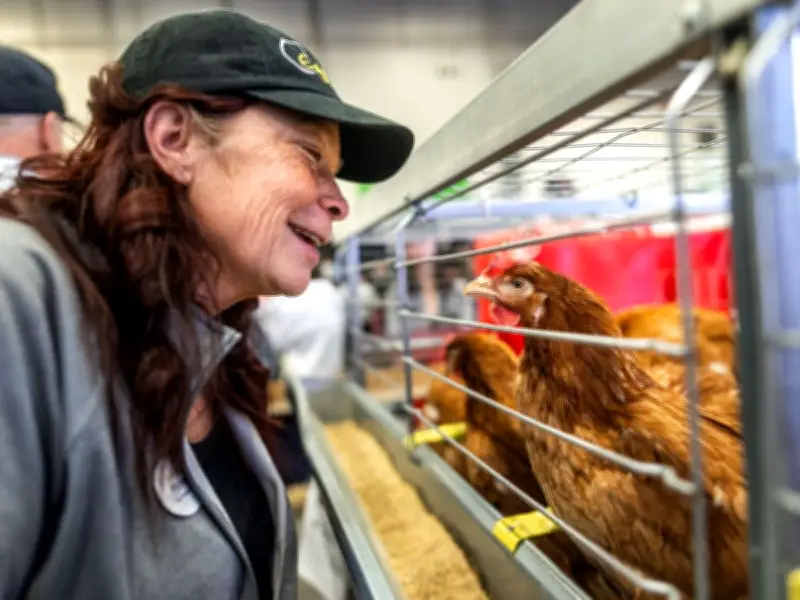
The world's population, currently about 8.3 billion, is expected to rise, requiring more food production on shrinking land. Cowley stressed the need for Albertans to support agriculture and producers. “The people who come to the Calgary Stampede, who come to Aggie Days every April, those are the current and future consumers that need to appreciate and understand how their food is produced,” he said. “They’re also the current and future voters who will vote for legislators who will hopefully be supportive of legislation that supports and allows us to obtain food security.”
Canada exports most of its food, making its agricultural success crucial globally. “We know we have an opportunity and we also feel like we have an obligation to educate people who come to the Calgary Stampede or one of our events throughout the year about the importance of agriculture,” Cowley added.