Landmark Trade Agreement Paves Way for Chinese Electric Vehicles in British Columbia
Prime Minister Mark Carney has signed a significant trade agreement with China that will dramatically reduce tariffs on Chinese-made electric vehicles entering Canada. In exchange, China has agreed to drop duties on Canadian agricultural products, creating a new chapter in bilateral trade relations.
Reduced Tariffs and Increased Access
The new agreement allows China to export up to 49,000 electric vehicles annually to Canada at a substantially reduced tariff rate of 6.1 percent. This represents a major shift from the 100 percent tariff imposed in 2024, which was implemented in alignment with United States trade policies. The tariff reduction is expected to make Chinese electric vehicles more accessible and affordable for Canadian consumers.
British Columbia's Electric Vehicle Market
British Columbia, along with Quebec, has been at the forefront of electric vehicle adoption in Canada. Industry observers anticipate strong interest in Chinese-made electric vehicles in B.C., particularly if these vehicles can be offered at lower price points than existing options in the market.

Bob Porter, president of the Vancouver Electric Vehicle Association, notes: "I'm hearing the Chinese cars are interesting. They're cheaper. We've got a couple of people I've talked to here that have driven them in China or in Europe, and they said they really like them."
Affordability and Market Impact
The Carney government has projected that within five years, more than half of the Chinese electric vehicles imported under this agreement will be considered affordable, with import prices below $35,000. This price point stands in stark contrast to current market offerings, such as the least expensive Tesla models available in B.C. for $55,000 to $60,000.
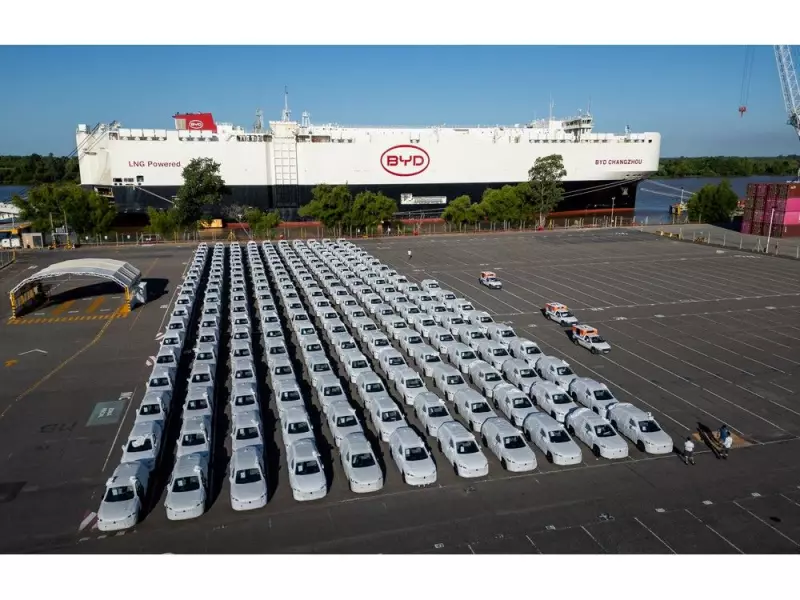
BYD, a leading Chinese electric vehicle manufacturer, already offers a short-range model in European markets starting at approximately Cdn$35,000, demonstrating the potential for competitively priced vehicles in the Canadian market.
Timeline for Availability
While the tariff reduction creates new opportunities, Chinese-made electric vehicles will not arrive immediately in British Columbia. The initial phase will likely involve a "reshuffling" of existing supply chains, according to Werner Antweiler, an associate professor at the University of British Columbia's Sauder School of Business.
Antweiler explains that companies like Tesla and Volvo, which already manufacture some vehicles in China, may shift their shipping routes back to China now that tariffs have been reduced. Previously, these companies had adjusted their logistics to avoid the 100 percent duties by shipping from Europe (Volvo) and the United States (Tesla).
Challenges for New Market Entrants
In the medium term, Chinese manufacturers such as BYD, XPENG, and Great Wall Motors may enter the Canadian market, but they will face significant challenges in establishing distribution networks. Antweiler, whose expertise lies in international trade policy, emphasizes that building after-sales service infrastructure for repairs and parts will require considerable time and effort.
"For many buyers, after-sales service for repairs and parts is important, and building up this network will take time, and considerable effort," Antweiler states. "I call this the brand-building phase."
Cold Weather Considerations
An important consideration for British Columbia consumers will be how Chinese electric vehicles perform in colder climates. While the article doesn't provide specific details about cold weather performance, this factor will likely influence consumer adoption rates in regions with challenging winter conditions.
The arrival of more affordable electric vehicle options could accelerate British Columbia's transition to zero-emission transportation, potentially impacting the province's environmental goals and consumer choices in the coming years.