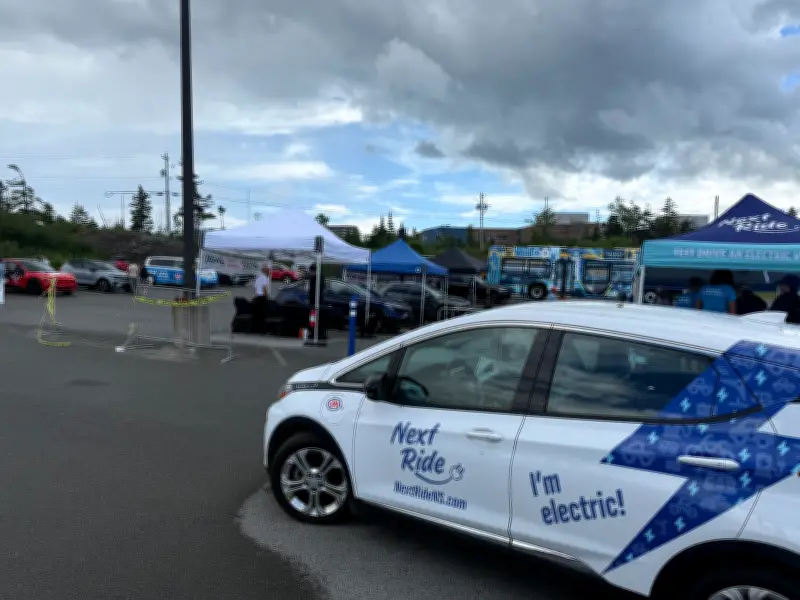
Rising gas prices are driving more Nova Scotians to explore electric vehicles (EVs) as a cost-saving alternative, according to attendees and organizers at the Halifax Electric Avenue event. The event, held on June 20, 2026, offered people the chance to test drive EVs and ask questions about ownership, charging, and costs.
Gas Prices Fueling Interest in EVs
Many attendees cited high fuel costs as a primary motivator for considering an EV. “With gas prices where they are, it’s becoming hard to justify filling up a gas car,” said one participant. “I’m here to see if an EV makes financial sense for my family.” The average price of regular gasoline in Nova Scotia has risen by over 15 cents per liter in the past month, according to provincial data.
According to event organizers, the number of attendees this year increased by roughly 20% compared to 2025, reflecting growing consumer interest. “We’ve seen a significant uptick in people wanting to learn about EVs,” said a spokesperson for the event. “The high gas prices are definitely a factor.”

Test Drives and Information Sessions
The event featured test drives of popular EV models from multiple manufacturers, including sedans, SUVs, and trucks. Attendees could also speak with EV owners about real-world experiences, such as range, charging infrastructure, and maintenance costs. “I was worried about range anxiety, but after talking to owners, I feel more confident,” said another attendee.
Information sessions covered topics like home charging installation, government incentives, and total cost of ownership. The federal government offers up to $5,000 in rebates for new EV purchases, while Nova Scotia provides an additional $3,000 rebate for qualifying models.
Broader Economic Impact
Experts say the shift toward EVs could have long-term economic benefits, including reduced fuel imports and lower greenhouse gas emissions. However, they caution that upfront costs remain a barrier for many households. “Even with rebates, the initial price of an EV is still higher than a comparable gas car,” said an automotive analyst. “But over time, the savings on fuel and maintenance can make up the difference.”
According to a recent survey by the Canadian Automobile Association, 35% of Canadians say they would consider an EV for their next vehicle purchase, up from 28% in 2025. In Nova Scotia, that figure is slightly higher at 38%, likely due to rising gas prices and increased availability of charging stations.
Charging Infrastructure Challenges
Despite growing interest, concerns about charging infrastructure persist. Nova Scotia currently has about 200 public charging stations, with plans to add 50 more by the end of 2026. “We need more fast chargers along highways and in rural areas,” said an EV advocate. “That’s key to making EVs practical for everyone.”
The provincial government has committed $10 million to expand the charging network, aiming to install 1,000 new chargers by 2030. Meanwhile, private companies are also investing, with several gas stations adding EV charging bays.
Environmental and Policy Context
The shift to EVs aligns with Canada’s goal to achieve net-zero emissions by 2050. Transportation accounts for about 25% of Canada’s greenhouse gas emissions, and electrifying vehicles is a key strategy to reduce that share. Nova Scotia’s Clean Energy Plan targets 30% of all new vehicle sales to be electric by 2030.
“Events like Halifax Electric Avenue are crucial for educating the public and accelerating adoption,” said the event spokesperson. “We’re seeing real momentum, and it’s only going to grow.”