A new report from the Lung Health Foundation (LHF) reveals that while Ontario's organized lung screening program is among the best globally, nearly half of lung cancer patients are still diagnosed at advanced stages. The report, Advancing Lung Cancer Outcomes in Ontario: Baseline System Performance and Priorities for 2035, provides the first comprehensive province-wide assessment of the lung cancer system from prevention through end-of-life care.
Key Findings on Diagnosis and Survival
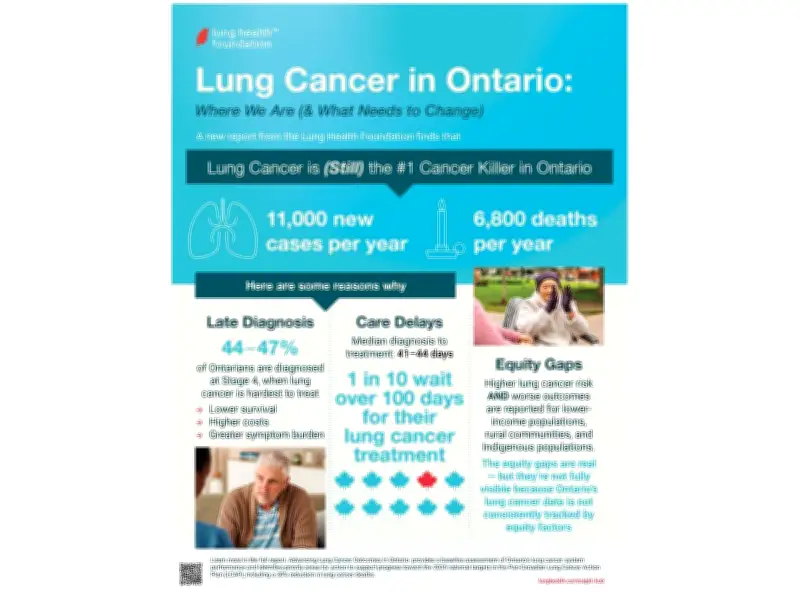
Lung cancer remains the leading cause of cancer-related death in Ontario. In 2024, approximately 11,000 Ontarians were diagnosed and more than 6,800 died from the disease. Five-year survival is about 29%, closely linked to late-stage diagnosis. Despite the screening program, 44% to 47% of lung cancers are still detected at Stage 4, while only 26% to 28% are caught at Stage 1, when treatment is most effective.
“The stage at which someone is diagnosed isn't just a clinical detail,” said Dr. Jessica Moffatt, Vice President of Programs, Public Affairs & Research at LHF and Co-Chair of the working group. “It changes everything. Whether someone gets curative surgery or months of systemic therapy, it changes what the rest of their life looks like. Right now, far too many people are finding out they have lung cancer at the worst possible moment.”

Treatment Delays and Equity Gaps
Treatment timelines remain a persistent concern. The median wait from diagnosis to first treatment is 41 to 44 days, with no improvement over the past decade. About one in 10 patients wait more than 100 days to begin treatment, allowing disease progression and reducing care effectiveness. The report also identifies significant equity gaps, with marginalized communities less likely to be screened or receive timely treatment.
“Ontario should be proud of what it has built,” Dr. Moffatt added. “The Ontario Lung Screening Program is a genuine world leader. It was designed from the ground up to be person-centred. But a great foundation only matters if we build on it deliberately. And right now, there are gaps in this system that, if left unaddressed, will cost lives.”
Call to Action for 2035 Targets
The report serves as both a celebration and a call to action, developed with clinicians, researchers, health system leaders, and people with lived experience. It highlights opportunities for targeted improvements to meet the Pan-Canadian Lung Cancer Action Plan's 2035 mortality reduction targets. Without addressing the stage-shift challenge and equity blind spots, Ontario risks falling short of these goals.