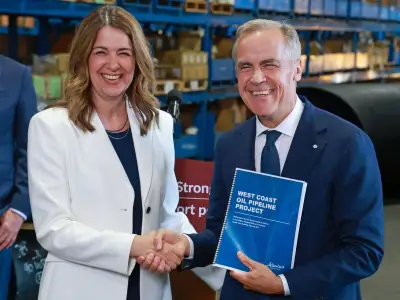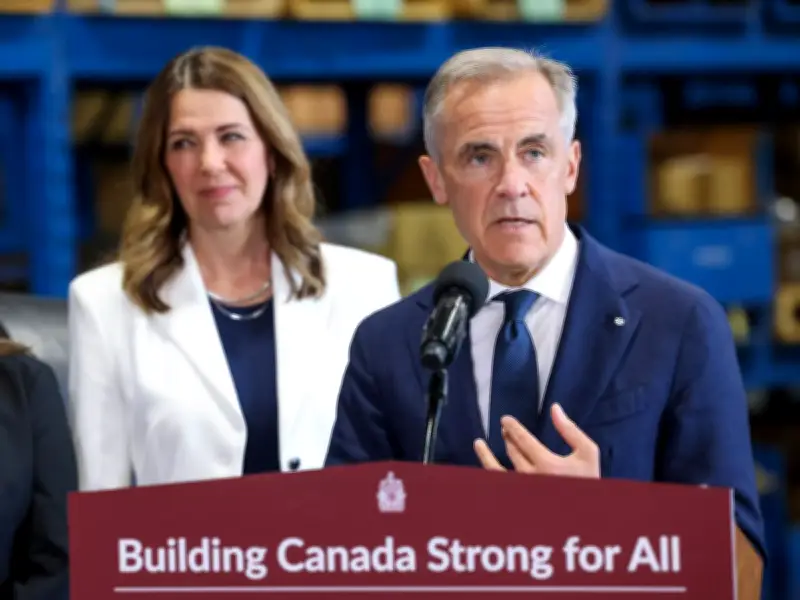
The big question looming over the Ottawa-Alberta pipeline agreement announced last week is whether any real private-sector money will be invested in the project. When Premier Danielle Smith was asked the obvious question about the new $35- to $45-billion Trans Mountain project, the best she could do was waffle. In response to Power & Politics interviewer Catherine Cullen's suggestion that it might be an entirely public project, Smith replied: “Well, I hope not.”
Government Forced to Buy and Build
Hope is one thing, but the recent history of pipeline development in Canada suggests it will not take the Trans Mountain project very far. Trans Mountain is now owned by Ottawa, which was forced to buy it for $4.5 billion and cover more than $34 billion in construction costs.
Thanks mostly to green anti-fossil fuel activism and Indigenous challenges, Canadian energy companies have been unable to justify investing in new pipelines or expanding existing ones. The regulatory and political risks are simply too high. Smith acknowledged: “You can well imagine why the industry is a little bit nervous … It takes commitment on the government’s part to de-risk the project.”

Private Sector Reluctance
According to basic principles of economics, carrying risk should primarily be the role of corporations and investors in the oil and gas industry. They assess risk and decide to put down money to move projects and economic growth forward. If the risks are too high, investment ceases. But when it comes to pipelines, industry has looked at the rising risks and refused to participate due to political attempts to block fossil fuel development and tackle climate change and other side issues.
Keystone XL: A Case Study
The first major Canadian pipeline rejection came in 2015 after President Barack Obama's secretary of state, climate activist John Kerry, firmly rejected the initial expansion of the Keystone pipeline from Alberta to the United States, known as the Keystone XL. Kerry cited climate change as the main reason for turning down the expansion. “This is a critical time for action on climate change,” he said. “The science is clear and widely accepted.”
In 2017, President Donald Trump succeeded Obama and re-approved the expansion, but president Joe Biden killed it again in 2021 on his first day in office. The climate issue dominated the decision. Despite interventions by Trump, Keystone XL remains under climate guardianship — although a reduced XL expansion has just been proposed by South Bow Canada and a U.S. partner. How that project will evolve remains to be seen.
Northern Gateway Abandoned
Other pipelines have failed to breach the environmental and financial risk barricades. In 2016, Enbridge Inc. abandoned its Northern Gateway pipeline proposal to the B.C. West Coast after spending more than a decade and $400 million trying to get approval from governments and the courts. Though at times the project seemed to have government support, it faced 209 regulatory conditions, along with opposition from Indigenous groups and environmentalists. Enbridge ultimately withdrew and ate the costs.