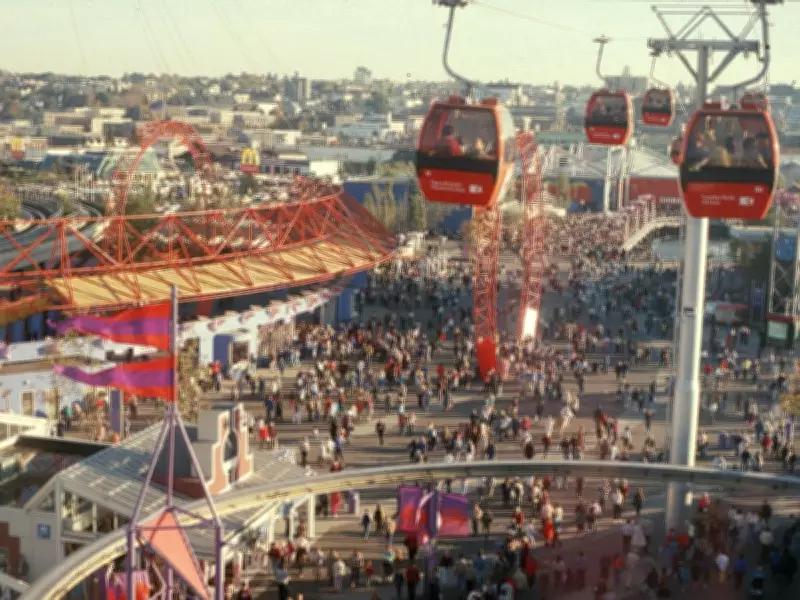
Ron Woodall is best known as the advertising genius behind A&W's Great Root Bear. But his lesser-known achievement is making Expo 86 a resounding success. As the creative director of the world's fair, Woodall proposed a radical shift from the traditional technology-focused expos to a vibrant, colorful carnival. 'The old Expos were all about technology and digital stuff,' Woodall explained. 'People lined up to go into black boxes. I told the board, "We can't do this. We don't have time or money. Let's turn all the pavilion money into flowers, color, street entertainment, and music, and create a great big classy carnival."' And that's exactly what they did.
A Summer of Celebration
The 67-hectare site on False Creek became a lively fair that was bustling day and night during a summer with seemingly endless sunshine. Expo 86 exceeded all expectations, drawing 22,111,578 visitors, far surpassing the initial goal of 13 to 15 million. 'The reason we had such numbers is that it was a fun place to hang out,' said Woodall, now 90. 'You didn't just go and see something; you went there like you were going to a nightclub every night. People with season tickets went back 100 times.'
Nostalgia and Memories
Forty years after Expo 86 opened on May 2, 1986, historian Jennifer Chutter organized a show-and-tell for the Vancouver Historical Society. About 100 attendees shared their memorabilia and memories. Rose Wong brought an array of posters and an official site map with six color-coded zones. She fondly recalled sampling global cuisine, but her favorite was bannock from the B.C. pavilion. 'I'd never heard of bannock before,' she said.

Writer Aaron Chapman, then 15, remembered riding the monorail and shouting playful insults at tourists from above. 'This was the height of comedy to me,' he laughed. He also recalled meeting a girl from North Vancouver, a novelty for a Kerrisdale resident. Chutter, who was 12, was amazed by the international pavilions. 'Suddenly I was looking at life-size paintings and sculpture and watching dance performances. It was a sensory environment of the world that I couldn't get from an encyclopedia.'
The Legacy of Expo 86
Expo 86 left an indelible mark on Vancouver, transforming the city's skyline and cultural landscape. The fair's success paved the way for future developments, including the creation of Science World and the redevelopment of the False Creek area. However, there was a tragic side: the eviction of poor residents from single-room occupancy hotels to make room for tourists. Despite this, the fair remains a cherished memory for many British Columbians, symbolizing a time of joy, discovery, and community.
The show-and-tell event featured Maurice Gulbord's impressive collection of 125 Expo 86 pins, a testament to the fair's enduring appeal. As Vancouver continues to evolve, the spirit of Expo 86 lives on in the city's vibrant culture and international outlook.