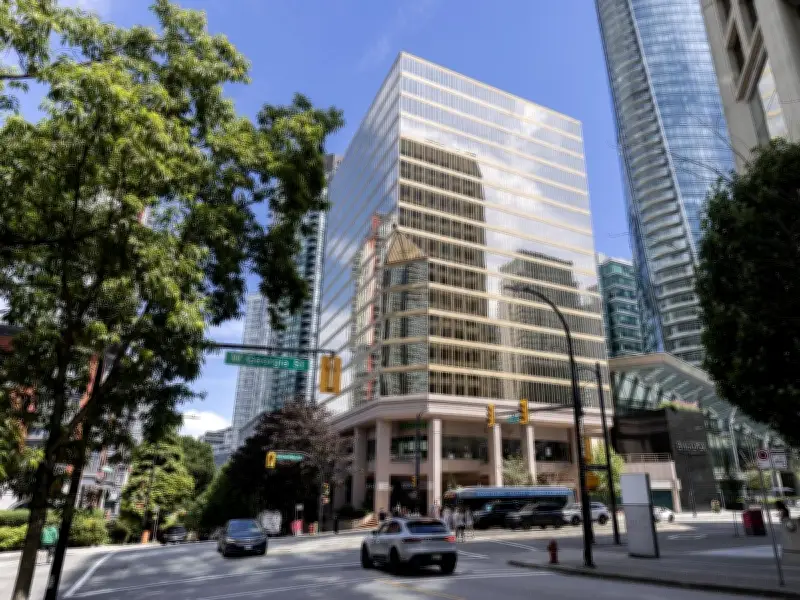
A 16-storey office tower in the heart of downtown Vancouver sold a few weeks ago, a sign that even though vacancy rates continue to be high, the market is stabilizing. Commercial real estate agents who handled the sale at the northeast corner of West Georgia and Bute streets haven’t disclosed the buyer or the price, but the sale is the second notable office tower transaction this year.
Market Stabilization Signs
It’s too early to call it a rebound, but we could be nearing a peak in the vacancy rate, some experts say. “In the next phase, there will be more demand for class A and class AAA office buildings, but we’re not there yet in the cycle where people want to press ‘go’ and build new towers,” said CBRE’s Jason Kiselbach, who wasn’t involved with the latest sale. “But some may be betting that if they buy B-class buildings, the rental rates will go up as the supply of class A and AAA space is harder to get and there are no new buildings.”
Forecast for Premium Space
Avison Young, also not involved in the latest sale, is forecasting that, by 2029, Vancouver’s trophy office vacancy rates could fall to 2.3 per cent from 13 per cent. That would be a drop back to the 2018 level when there was severe space constraints and rising rents. “I think when we look at the office market, we tend to judge it in a rear-view mirror. Most people are looking at vacancy. When we publish stats, it’s what’s just happened,” said Shawna Rogowski, leader of Avison Young (Canada) Inc.’s market intelligence team in Vancouver. “With this forecast, we’re looking at what happens next. When it comes to premium space, with nothing under construction right now downtown, the soonest something might deliver … might be 4½ years.”

Absorption Scenarios
Avison looked at how quickly vacant class A or AAA office space could be taken off the market, based on the 10-year average absorption rate of about 330,000 square feet a year, assuming that no new class A or AAA is brought onto the market in the next 3½ years. It found that the vacancy rate would drop to about 6.3 per cent by 2029. If there was only half of the historical average absorption, the vacancy rate would drop to about 10 per cent. But if leasing activity was 150 per cent of the historical average annual, then the vacancy rate would fall to 2.3 per cent by 2029. What is unclear is which of those three scenarios is most likely.
Tenant Expansion
Glenn Gardner, a principal at Avison Young who leads the office leasing team, said existing tenants are expanding. “We continue to see that because organizations have now, basically, across the board, with a few exceptions, asked their employees to come back three to five days a week, so when you factor in the fact that they now need to have space for all these people, quite a number of tenants are beginning to realize they need a little bit more space.”