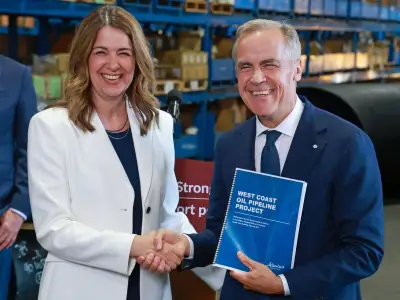
A landmark agreement between Prime Minister Mark Carney and Alberta Premier Danielle Smith is reshaping Canada's climate and energy debate. Announced in early January 2026, the deal proposes a grand bargain: the federal government considers a new West Coast pipeline and suspends the federal emissions cap, while Alberta agrees to raise its industrial carbon price and commit to the massive Pathways Plus carbon capture and storage (CCS) initiative.
The Physics of Fossil Fuels and a Path Forward
The polarized reaction to the memorandum—hailed by supporters as unleashing a "clean energy superpower" and condemned by critics as a betrayal of climate targets—often misses a fundamental physical reality. The global economy remains physically reliant on fossil fuels, yet the atmosphere can no longer be a free dumping ground for carbon waste.
We have known for over 170 years that carbon dioxide is a planet-warming greenhouse gas. The CO2 we emit today was locked away over tens of millions of years and will persist in the atmosphere for centuries unless actively removed. The solution lies not in an impossible overnight halt to fossil fuel use, but in achieving geological net zero: for every tonne of carbon taken from the ground, a tonne must be put back.

Decarbonized Oil: A Physical Necessity, Not an Illusion
The concept of "decarbonized oil" is grounded in scientific and economic necessity. Even the most ambitious Intergovernmental Panel on Climate Change (IPCC) scenarios that meet Paris Agreement goals project substantial use of oil and gas well past the year 2100, long after global temperature rise must be halted.
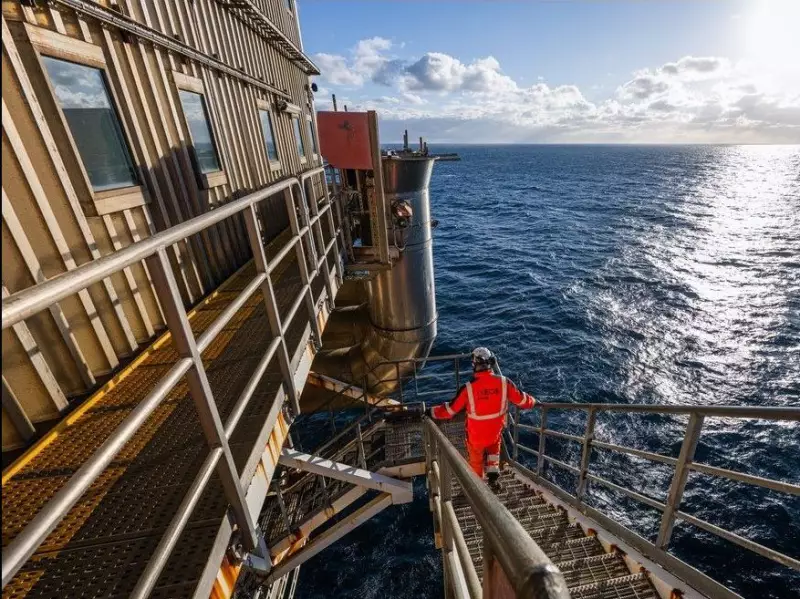
This means the world will likely stop climate change by decarbonizing fossil fuels through carbon capture and permanent storage long before it phases them out entirely. Projects like the one nearing completion in the Danish North Sea, where imported European CO2 is buried under the seabed, exemplify this emerging industrial reality.
Canada's Strategic Economic Opportunity
For Canada, this framework presents a significant strategic and economic opportunity. The Pathways Plus project in Alberta represents the scale of ambition required. By investing in the technology and infrastructure to capture and permanently store carbon, Canada can position itself not just as a traditional energy supplier, but as a future leader in the global market for decarbonized hydrocarbon products.
The agreement recognizes a dual imperative: respecting the uncompromising laws of physics that govern our climate system, while navigating the complex realities of the global economy and energy transition. The path to viability for Canada's energy sector now runs directly through geological net zero, turning a climate obligation into a potential competitive advantage.