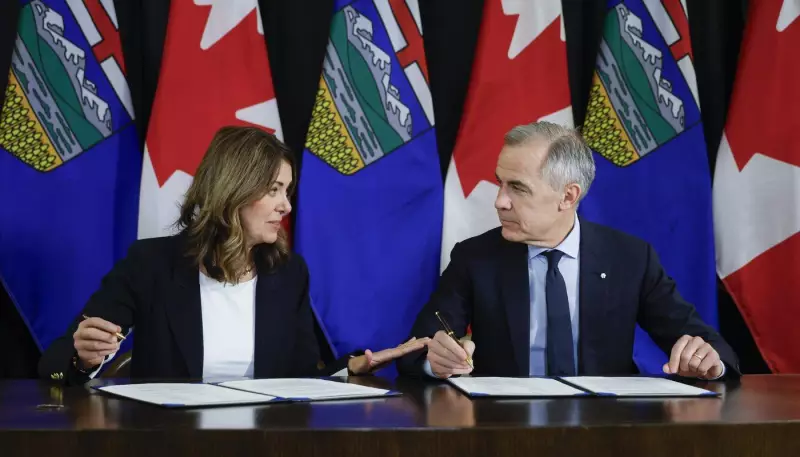
In a significant move highlighting internal discord over Canada's energy and climate direction, several senior federal climate advisers have resigned from their roles. Their departure is a direct response to the recent memorandum of understanding (MOU) on pipelines signed between Prime Minister Mark Carney and Alberta Premier Danielle Smith.
Advisers Exit Over Energy Agreement
The resignations were submitted following the signing of the pipeline agreement in Calgary on Thursday, November 27, 2025. While the advisers' names were not immediately disclosed in the initial report, their collective action signals a profound disagreement with the federal government's strategic alignment with Alberta's energy expansion plans. The advisers reportedly viewed the MOU as incompatible with the ambitious national climate targets they were appointed to help achieve.
Details of the Controversial MOU
The memorandum, inked by Prime Minister Mark Carney and Alberta Premier Danielle Smith, outlines a framework for cooperation on pipeline development and energy infrastructure. Proponents argue it is essential for economic growth and energy security. However, critics, including the now-former advisers, contend that such agreements undermine Canada's commitments to reduce greenhouse gas emissions and transition to a cleaner economy.

The political fallout is immediate, placing the Carney government in a delicate position. It must balance the economic interests of the resource-rich province of Alberta against the demands of environmental advocates and its own climate goals. This tension is a recurring theme in Canadian federal-provincial relations, but the resignation of key advisers brings the conflict into sharp, public focus.
Broader Implications for Climate Policy
This development raises serious questions about the coherence and future of Canada's climate strategy. The loss of experienced advisers creates a vacuum in policy guidance at a critical time. Furthermore, the incident may embolden opposition parties and environmental groups to intensify their scrutiny of the government's energy decisions.
The resignations also underscore the ongoing and fierce debate over the role of fossil fuel infrastructure in a country striving to meet its net-zero emissions pledge. The advisers' dramatic exit serves as a stark indicator that, for some experts within the system, the new pipeline agreement crossed a red line.
As the news broke on December 5, 2025, the federal government had not yet announced replacements for the departed advisers. The coming days will likely see increased pressure on both Ottawa and Edmonton to clarify how the pipeline MOU aligns with the nation's legislated climate obligations.