B.C. Takes Action on Flood Planning Amid Climate Challenges
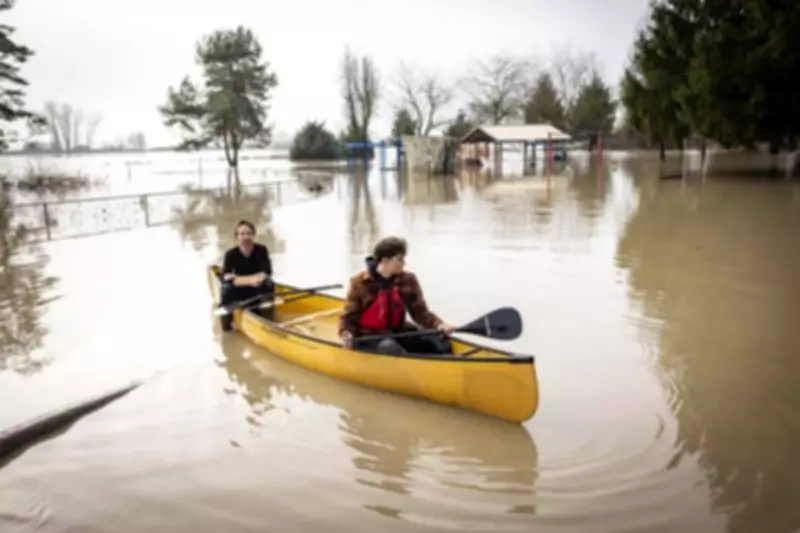
British Columbia is confronting climate-related threats with new funding and emergency declarations as the province faces ongoing environmental pressures. The provincial government has allocated $3.3 million specifically for flood planning in the Fraser Valley, a region that has experienced devastating flooding in recent years.
Multiple Climate Concerns Emerge Simultaneously
This week's climate developments reveal several concerning trends across British Columbia. In addition to the flood planning investment, the Comox Valley has officially declared a flooding state of emergency, indicating immediate threats to local communities. Meanwhile, the South Coast region is experiencing alarmingly low snowpack levels, which could significantly impact water resources throughout the coming seasons.
A recent report from The Narwhal has raised additional environmental concerns, revealing that LNG Canada has been flaring up to fifteen times more natural gas than initially anticipated. This development highlights the complex relationship between energy development and environmental protection in the province.

The Scientific Context of Climate Change
Human activities, particularly the burning of fossil fuels and intensive livestock farming, remain the primary drivers of climate change according to the United Nations Intergovernmental Panel on Climate Change. This international scientific body, which includes researchers from British Columbia, has issued increasingly urgent warnings about the consequences of rising greenhouse gas concentrations.
The panel has specifically noted that extreme weather events—including the deadly heat dome and catastrophic flooding that struck British Columbia in 2021—will become more frequent and intense as the climate emergency progresses. Scientists have described the situation as a "code red for humanity," emphasizing that the window to limit global warming to 1.5 degrees Celsius above pre-industrial levels is rapidly closing.
Atmospheric Changes and Temperature Records
NASA climate scientists report that human activities have increased atmospheric carbon dioxide concentrations by fifty percent in less than two centuries. Current measurements show carbon dioxide levels at approximately 427.49 parts per million as of early January, representing a steady increase from under 320 parts per million recorded in 1960.
Recent temperature records further illustrate the accelerating pace of climate change. The global average temperature reached 1.48 degrees Celsius above pre-industrial averages in 2023, breaching the 1.5-degree threshold at 1.55 degrees Celsius in 2024. The year 2025 marked the third warmest on record, continuing an unprecedented streak of eleven consecutive warmest years.
International Climate Commitments and Realities
Despite international agreements like the Paris Accord, which aims to limit global temperature increases, current projections suggest the world is not on track to meet these critical targets. The United Nations Environment Programme's 2025 Emissions Gap Report indicates that even if countries fulfill their existing emissions reduction commitments, global temperatures could still rise between 2.3 and 2.5 degrees Celsius this century.
This projected warming exceeds the Paris Agreement's goal and would likely result in more severe consequences, including accelerated sea level rise, more intense drought conditions, increased frequency of heat waves, and more destructive wildfire seasons. The scientific consensus remains clear: the climate is warming at an unprecedented rate, and human activities are the primary cause.
As British Columbia addresses immediate threats through flood planning and emergency declarations, these local actions occur against a backdrop of global climate challenges that require coordinated international response and sustained commitment to emissions reduction.