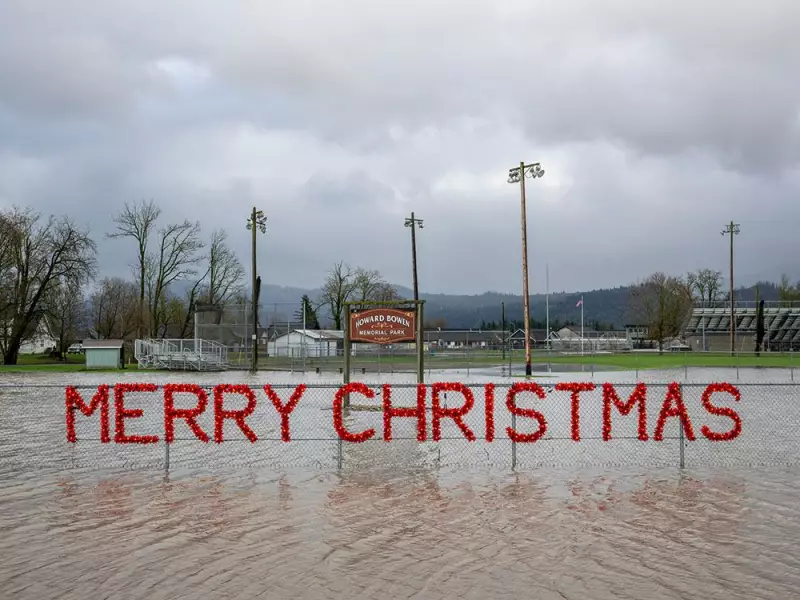
As the holiday season unfolds, the stark realities of a changing climate remain front and centre. In Sumas, Washington, festive decorations adorn a fence bordering a baseball field submerged by floodwaters—a poignant image captured on December 15, 2025. This week's climate and biodiversity news from British Columbia and beyond highlights both the escalating challenges and the steps being taken to address them.
Provincial and Federal Climate Actions
In a significant move, the Government of British Columbia has formally requested financial assistance from the federal government in Ottawa. The province is seeking support to fund a comprehensive flood risk reduction plan, a critical need underscored by the catastrophic flooding experienced in 2021. This call for help emphasizes the growing financial burden of climate adaptation on provincial resources.
Simultaneously, B.C. has announced a major conservation achievement. More than 450 square kilometres of forestry land in southeastern B.C. is now under protection. This expansion of conserved area is a key strategy in preserving biodiversity and enhancing ecosystem resilience against climate impacts.

On the national stage, the federal government has taken action on a potent greenhouse gas. Ottawa has introduced stricter regulations aimed at reducing methane emissions. Methane is a far more potent heat-trapping gas than carbon dioxide in the short term, making these new rules a crucial part of Canada's strategy to curb atmospheric warming.
The Unabated Scientific Reality
These policy developments unfold against a backdrop of relentless scientific warnings. The UN's Intergovernmental Panel on Climate Change (IPCC), which includes researchers from B.C., has consistently linked human activities—primarily burning fossil fuels and intensive livestock farming—to the climate crisis. The panel has issued a code red for humanity, noting that the window to limit global warming to 1.5 degrees Celsius above pre-industrial levels is rapidly closing.
The data continues to paint a concerning picture. As of December 5, 2025, atmospheric carbon dioxide levels measured at Hawaii's Mauna Loa Observatory reached 426.46 parts per million (ppm), a slight increase from 424.87 ppm the previous month. NASA scientists state that human activities have increased atmospheric CO2 by 50 per cent in less than 200 years, driving unprecedented planetary warming.
Climate Change in Stark Numbers
The evidence of accelerating change is now etched in global records. The year 2024 was the hottest on record globally, surpassing the previous record set in 2023. The global average temperature for 2024 breached the critical 1.5 C threshold, reaching approximately 1.55 C above pre-industrial averages. The past decade (2015-2024) stands as the warmest ten-year period ever recorded.
Current trajectories are not aligned with international goals. The world is not on track to meet the Paris Agreement target of staying below 1.5 C of warming. The IPCC warns that on the present path, the global temperature could increase by as much as 3.6 C this century, a scenario that would drastically intensify sea-level rise, droughts, heatwaves, and wildfires. To avoid the worst outcomes, emissions must drop by 7.6 per cent annually from 2020 to 2030.
The collective scientific consensus remains unequivocal: the climate is warming at a dangerous pace, and human activity is the dominant cause. The actions taken this week in B.C. and Ottawa represent parts of a complex, urgent response to a defining challenge of our time.