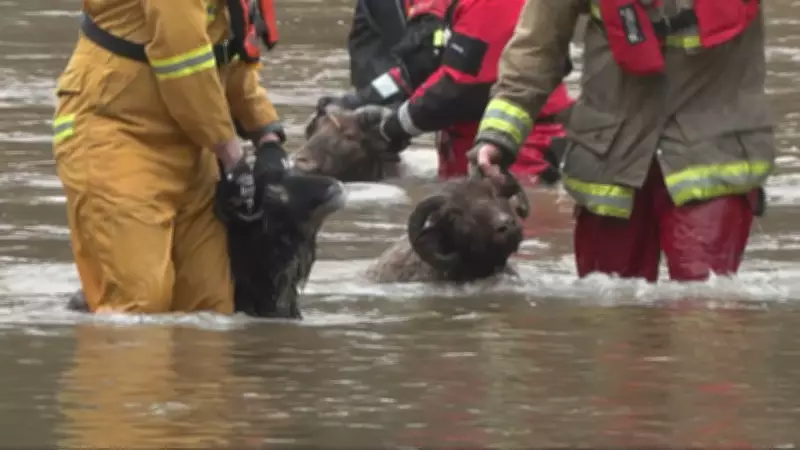
Emergency Teams Rescue Stranded Residents and Livestock During Vancouver Island Flooding
Rising floodwaters on Vancouver Island prompted a dramatic emergency response on January 30, 2026, as search and rescue teams worked tirelessly to evacuate stranded people and animals from dangerous conditions. The incident underscores the increasing frequency and severity of weather-related emergencies affecting coastal British Columbia communities.
Comox Valley Search and Rescue Leads Critical Operations
Members of Comox Valley Search and Rescue were deployed to multiple locations where rapidly rising waters threatened both human safety and agricultural livelihoods. In one particularly notable operation, rescue personnel guided a flock of sheep to higher ground, preventing potential livestock losses and demonstrating the comprehensive nature of emergency response during natural disasters.
The flooding occurred amid a state of local emergency that had been declared for the region due to significant precipitation and melting snowpack. Emergency officials warned residents about rapidly changing conditions and urged people in low-lying areas to remain vigilant and prepared for possible evacuation orders.

Climate Patterns and Infrastructure Challenges
This flooding event on Vancouver Island follows a pattern of increasingly volatile weather conditions affecting British Columbia. Scientists have linked such incidents to broader climate change trends, including more intense precipitation events and shifting seasonal patterns that challenge existing infrastructure and emergency preparedness systems.
Local authorities emphasized that while search and rescue teams successfully managed this particular emergency, the incident highlights the need for continued investment in flood mitigation infrastructure and community resilience planning. Agricultural communities face particular vulnerability during such events, as livestock and crops can be severely impacted by sudden flooding.
Broader Context of Emergency Response in British Columbia
The Vancouver Island rescue operations occurred against a backdrop of various emergency situations across Canada, including extreme cold warnings in other regions and ongoing discussions about climate adaptation strategies. British Columbia has experienced multiple significant weather-related emergencies in recent years, from atmospheric rivers to heat domes, prompting renewed focus on disaster preparedness.
Emergency management experts note that successful responses like the Vancouver Island flood rescue depend on coordinated efforts between multiple agencies, adequate resourcing of search and rescue teams, and effective communication with affected communities. The incident serves as both a testament to the skill of emergency responders and a reminder of the growing challenges posed by climate-related disasters.
As floodwaters recede, assessment teams will evaluate damage to properties and infrastructure while community organizations provide support to affected residents. The rescue of both people and livestock during this emergency demonstrates the multifaceted nature of disaster response in regions where agricultural and residential areas often intersect in vulnerable floodplains.