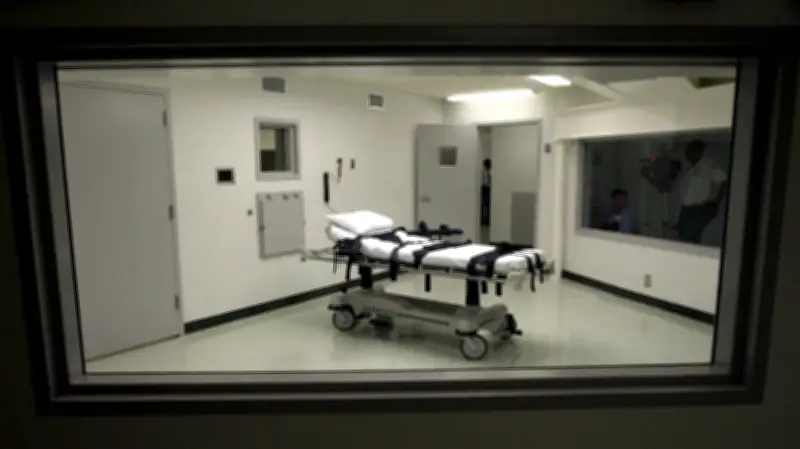
The U.S. Supreme Court on Thursday refused to lift a lower-court injunction blocking Alabama from executing Jeffery Lee by nitrogen gas, sparing the 49-year-old death row inmate at least temporarily. The high court issued a brief order without explanation, voting 6-3, with Justices Clarence Thomas, Samuel Alito, and Neil Gorsuch dissenting. The execution, originally scheduled for the evening, was called off by the Alabama Department of Corrections, which said no alternative method would be attempted.
Court Ruling and Reactions
Lee's legal team celebrated the decision, noting that his jury had recommended life imprisonment, but a judge overruled that sentence. In a statement, they said, "His jury voted for life. Two courts ruled the method unconstitutional. Today, the Constitution prevailed. Now Governor Ivey can finish what the jury started: restore the jury's verdict of life without parole." Alabama Attorney General Steve Marshall expressed disappointment, calling the ruling a "miscarriage of justice" for the victims' families. He vowed to continue seeking justice for Jimmy Ellis and Elaine Thompson, whom Lee murdered during a 1998 pawnshop robbery.
Legal Battle Over Nitrogen Gas
Lee's lawsuit challenged Alabama's nitrogen hypoxia protocol as cruel and unusual punishment under the Eighth Amendment. U.S. District Judge Emily Marks initially ruled the method constitutional in May, but a three-judge panel of the 11th U.S. Circuit Court of Appeals reversed that decision on Monday, citing the "intolerable" three-minute period before an inmate loses awareness. Marks then blocked the execution on Tuesday, prompting the state's appeal to the Supreme Court. The state argued that a permanent ban on a legislatively enacted method would be unprecedented and expand the concept of cruelty beyond constitutional bounds.

Nitrogen Gas Executions in Alabama
Alabama introduced nitrogen gas executions in 2024, using a respirator to replace breathable air with pure nitrogen, causing death by oxygen deprivation. Eight such executions have occurred nationwide—seven in Alabama and one in Louisiana. Witnesses reported inmates shaking, pulling at restraints, and labored breathing. During the state's most recent nitrogen execution, 30 minutes elapsed before officials signaled completion. The state maintains the method is constitutional and no more painful than other methods.
Background on Jeffery Lee
Lee was convicted of two counts of capital murder for the December 12, 1998, killings of Ellis and Thompson during a pawnshop robbery. A jury voted 7-5 for life imprisonment, but a judge overrode that decision, sentencing him to death. Alabama abolished judicial overrides in 2017, no longer allowing judges to disregard jury sentencing in capital cases. Bestselling author John Grisham urged Governor Kay Ivey to commute Lee's sentence, stating, "The practice of a judge overriding a jury was declared unconstitutional and so indefensible that Alabama itself abolished it in 2017." Ivey responded that she was disappointed but committed to ensuring justice for the victims.
What's Next
The Supreme Court's decision blocks Lee's execution for now, but the reprieve's duration is uncertain. The lower-court order only blocks nitrogen gas; Alabama also authorizes lethal injection and the electric chair. The state continues to argue that nitrogen gas is constitutional, and further legal proceedings are expected.