Creating a home gardening plan that restores and supports nature in urban spaces begins with selecting a native tree. For any gardener, this choice can have a profound impact on the local ecosystem.
The Pagoda Dogwood: A Perfect Urban Native
One of my favorite trees, the pagoda dogwood (Cornus alternifolia), is well suited to an urban-sized yard. This medium-sized woodland species grows about 12 feet tall (3.6 meters) and prefers dappled sun or shade. Its clusters of white flowers attract pollinators in the spring, and birds devour its blue berries in the fall. It is a tough tree that grows easily in the Ottawa area and requires minimal care. Being a native tree, it is ideal for gardeners who care about nature.
Pollinator Appreciation Day 2026
Start with a Native Tree is the theme for the 2026 Pollinator Appreciation Day in late June at the Fletcher Wildlife Garden. This event is popular with gardeners because it features many local experts available to answer questions and share information. This year, volunteers from Master Gardeners of Ottawa-Carleton will be there to offer advice, along with the Monarch Teachers Network, the Ottawa Wildflower Seed Library, and other local nature-focused organizations.

Finding Native Trees
Despite the many benefits of native trees, they are not always easy to find at garden centers. Cultivars may be more readily available; however, they may have somewhat dubious benefits for nature. It always helps to do some research before shopping for a tree, and this event will make it easier to do just that.
Why Start with a Native Tree Matters
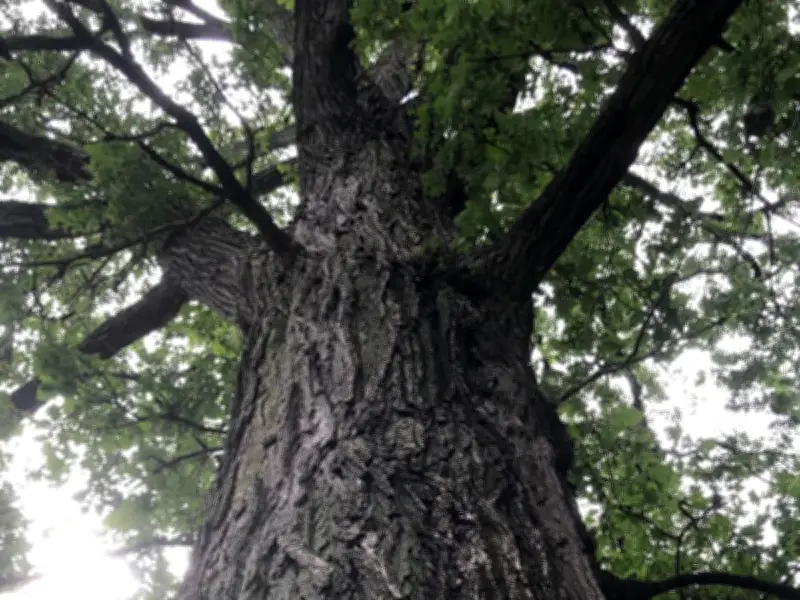
Start with a Native Tree is particularly important because planting just a single native tree can be a real game-changer. A single native oak tree, for instance, such as a bur oak (Quercus macrocarpa) or a white oak (Quercus alba), can support over 400 different kinds of caterpillar species. Given their remarkable ability to attract pollinators and other insects, oak trees are pivotal in supporting biodiversity in our region and are referred to as a keystone plant.
Host Plants and Food Webs
As host plants, native trees help create a diverse food web, including caterpillars necessary for the survival of baby birds. Unlike adult birds, baby birds cannot eat seeds and nuts typically offered at bird feeders. Native trees can also make a big difference in pollinator biodiversity. More pollinators in our yards mean better fruit and vegetable yields and beautiful flowers for our gardens. Natives are also tough, strong trees, so they are easy to grow.
The Fletcher Wildlife Garden
Fletcher Wildlife Garden, located next to the Experimental Farm near Dow's Lake, offers the perfect venue for this kind of event. Cared for and maintained by the Ottawa Field Naturalists' Club, volunteers have planted native trees as well as an understory of forest plants and shrubs. They have also worked diligently to remove invasive plant species that destroy natural habitat, including the fast-spreading dog strangling vine (Cynanchum rossicum). Visitors can stroll through the Fletcher Wildlife Garden or take a guided tour to learn about native trees and other native plants found growing there.