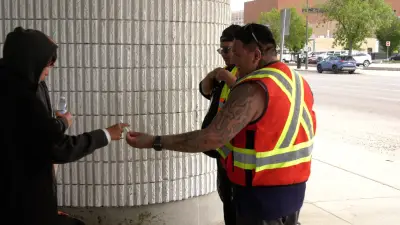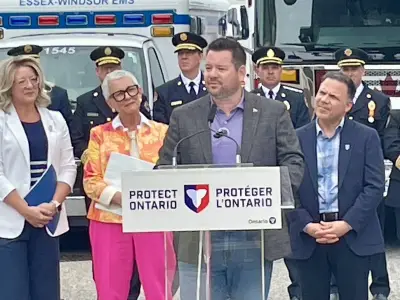
Saskatoon's most recent drop-in centre at 130 Idywyld Drive North sparked concerns about homelessness supports being located too close to a new daycare. However, a city report indicates that implementing buffer zones for daycares would severely restrict where such facilities can be placed.
Existing School Buffer Zones
The city currently prohibits new drop-in centres and shelters from being built within 250 metres of schools. This rule was established after a proposed emergency shelter in 2024 at the former firehall in the Sutherland community faced opposition due to its proximity to a school. The shelter plan was subsequently cancelled, and the buffer zone policy was enacted, covering large portions of Saskatoon.
Potential Daycare Buffer Zones
Concerns resurfaced in February when a drop-in centre at 130 Idylwyld Drive was announced, with residents worried about its closeness to a new daycare centre. In response, city administration created maps illustrating the current coverage of school buffer zones and how much additional space would be restricted if daycares were included. The report notes potential inaccuracies in daycare data, as not all daycares are provincially licensed. However, information from the province was used to map daycare centres and group family childcare businesses in Saskatoon.

The maps reveal that while school buffer zones already cover a significant portion of the city, adding daycare buffers would leave very little available land for shelter or drop-in centre development.
Challenges in Finding Locations
The city acknowledges that finding suitable locations for shelters has been challenging, citing factors such as building size, zoning requirements, landlord interest, scheduling, and community opposition. Lesley Anderson, the city’s director of planning and development, stated in September that the city had evaluated 100 locations in its search for shelter spaces. Community members have questioned why more sites on the outskirts of Saskatoon were not considered, but Anderson explained that access to public transportation and other services is a key criterion for shelter locations.
Although city administration is not currently seeking new facility locations, it anticipates that more facilities will be needed in the coming months and years.
Provincial Role and Homelessness Data
The Saskatchewan government is responsible for building and managing shelter spaces in Saskatoon. In 2023, the province tasked the city with finding locations for potential shelters and drop-in centres, aiming for a total of 60 beds that could be distributed across multiple sites. A point-in-time homelessness count in 2022 identified 550 homeless individuals in Saskatoon, but that number surged to 1,931 in the most recent count in 2025.