The United States and Iran announced Sunday night a 60-day ceasefire that will reopen the Strait of Hormuz and end the American naval blockade of Iranian ports. Whether this constitutes a victory for Washington or Tehran remains unclear, as both sides have provided wildly different accounts of what was conceded.
Not a Peace Deal
Before anything else, let it be clear that this agreement is not a “peace deal.” Rather, it is only a legally nonbinding memo of understanding that will freeze hostilities on all fronts — including in Lebanon, where Israel is currently fighting Hezbollah, an Iranian-backed terrorist militia.
Set to be ceremonially signed in Switzerland this Friday, the memo will allow Washington and Tehran to move forward on some issues (e.g. ending their respective blockades) while establishing a negotiating framework to tackle more complicated tensions over the next two months.

Trump's Celebration
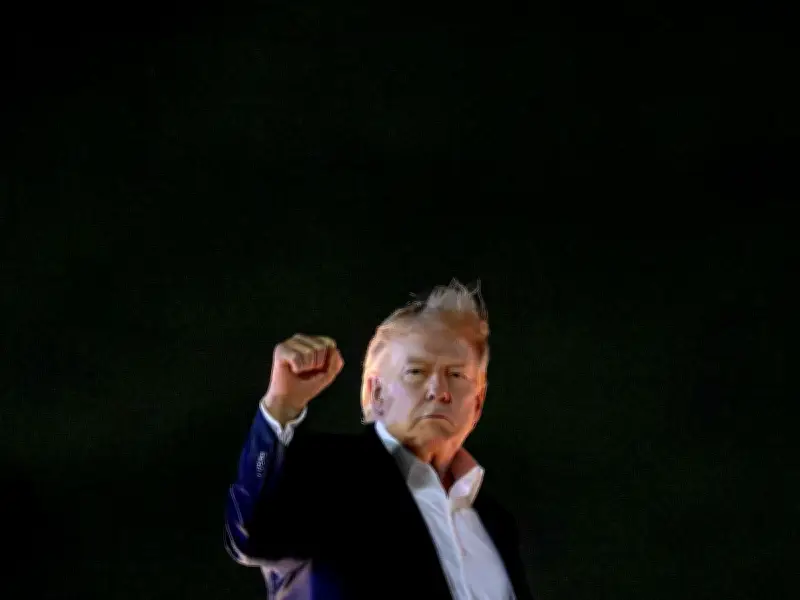
“Ships of the World, start your engines. Let the oil flow!” Trump posted on Truth Social Sunday night in celebration of a deal whose details he disclosed little about.
An unnamed senior Trump administration official told CNN last Friday that Iran agreed to destroy and remove its nuclear material, dismantle its nuclear program, fully reopen the Strait of Hormuz (without tolls) and cease funding its proxy terror network (e.g. Hezbollah and Hamas). This would apparently be a “performance-based deal” where the Islamic Republic’s frozen international funds would be returned following compliance with these terms.
Tehran's Version
Yet, Tehran seems to have a wildly different understanding of where negotiations are heading. Iranian government-aligned media outlets have claimed that no concessions have been made on nuclear issues, which will apparently be negotiated during the ceasefire, and that Hormuz will reopen under Tehran’s control. They have also claimed that the United States will unfreeze $24 billion in Iranian funds — half of which will be immediately available upon signing the ceasefire memo — and that the United States will establish a $300 billion reconstruction fund as compensation for the war.
This narrative was repudiated as “fake information” by Vice President JD Vance, who, in a post on X, stated that “Iranians are not receiving any cash, and no funds are being released for simply signing a deal or attending a meeting.”
Potential Disaster
Hopefully he is telling the truth, because, if the ceasefire memo remotely resembles what the Islamic Republic’s supporters describe, then it will be an unmitigated disaster for Washington.
Since his first term in power, U.S. President Donald Trump has sought to dismantle Iran’s nuclear weapons program, ballistic missile arsenals and proxy forces. Upon launching Operation Epic Fury this spring, he went even further and vowed regime change, too. While some described his subsequent war as a failure, the reality is that the United States and Israel generally dominated the fighting and partially achieved some of their goals.
At the beginning of the year, Iranian officials reportedly gloated that they could make 11 nuclear bombs — but American and Israeli bombing campaigns entombed their weapons-grade uranium deep underground, rendering it inaccessible. Roughly a third of Iran’s ballistic missiles were destroyed, the country’s navy was obliterated and, although the regime survived, many of its leaders were killed.
Now, with gas prices a key issue, Trump may have sacrificed these hard-won gains for short-term relief at the pump. The true cost of this ceasefire remains to be seen.