Southern Ontario Jolted by Rare Magnitude 3.7 Earthquake Near Orillia
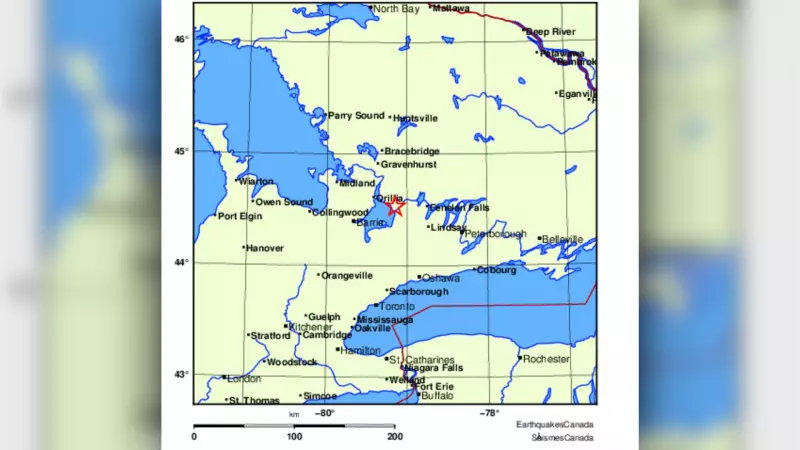
A significant seismic event rattled parts of southern Ontario on Tuesday, with a magnitude 3.7 earthquake recorded near Orillia. According to Earthquakes Canada, the tremor struck late at night, prompting widespread reactions from residents across the region who reported feeling the ground shake. This occurrence is considered quite unusual for an area not typically associated with frequent earthquake activity.
Understanding the Seismic Anomaly in a Stable Region
Southern Ontario lies within a generally stable continental interior, far from active tectonic plate boundaries. Major earthquakes are infrequent here, making Tuesday's event a notable exception. Seismologists classify such tremors as intraplate earthquakes, which occur within the interior of tectonic plates rather than at their edges. These events can be challenging to predict and often stem from ancient geological stresses.
Science and Tech Expert Dan Riskin provided insight into the possible causes behind this rare seismic activity. He suggested that the earthquake could be linked to post-glacial rebound, a process where the Earth's crust slowly adjusts after the weight of massive ice sheets from the last ice age, which ended approximately 10,000 years ago, has been removed.

The Role of Ancient Glaciers in Modern Seismicity
As glaciers melted millennia ago, the land beneath began to rise gradually—a phenomenon known as isostatic rebound. This ongoing adjustment can generate stress within the bedrock, occasionally releasing as minor earthquakes. While most rebound-related tremors are too subtle to be felt, a magnitude 3.7 event is significant enough to capture public attention and scientific interest.
Riskin emphasized that such earthquakes, while rare, are not entirely unexpected given the geological history of the region. They serve as a reminder of the dynamic processes shaping the Earth's surface long after visible ice has disappeared.
Public Reaction and Safety Implications
Residents across Ontario took to social media and local news outlets to share their experiences, with many expressing surprise at feeling an earthquake in a region where seismic events are uncommon. Earthquakes Canada confirmed the tremor's epicenter near Orillia and assured the public that no injuries or significant damage were reported.
Although a magnitude 3.7 earthquake is considered minor and unlikely to cause structural damage, it highlights the importance of earthquake preparedness even in areas with low seismic risk. Experts recommend that households maintain basic emergency kits and familiarize themselves with safety protocols, such as Drop, Cover, and Hold On during shaking.
Broader Context of Seismic Activity in Eastern Canada
Eastern Canada, including Ontario, experiences occasional earthquakes due to residual stresses from glacial rebound and other tectonic forces. While most are minor, historical records indicate that larger events, such as the 2010 magnitude 5.0 earthquake in central Ontario, can occur. Monitoring and research by organizations like Earthquakes Canada help improve understanding of these patterns.
This recent event near Orillia underscores the complex interplay between ancient geological processes and modern seismic monitoring. It provides valuable data for scientists studying intraplate seismicity and contributes to public awareness of natural hazards in regions often perceived as seismically quiet.