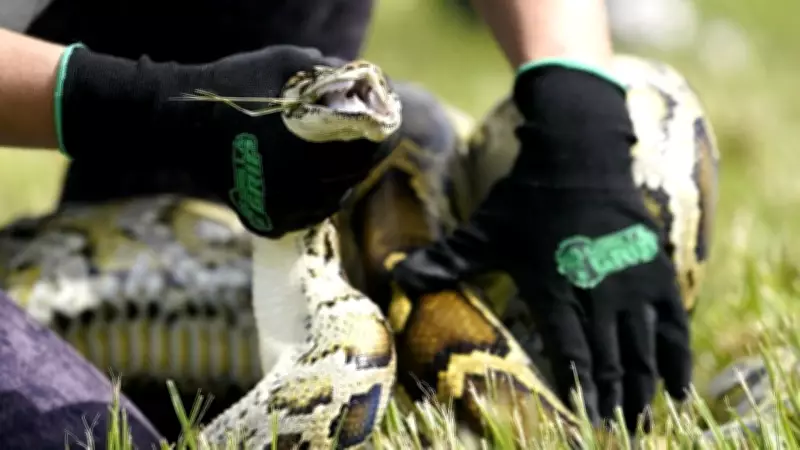
In an innovative approach to combat the spread of invasive Burmese pythons in Florida, scientists are enlisting the help of native raccoons and possums. These animals are being fitted with tracking devices to help researchers locate the elusive snakes, which have become a significant threat to the local ecosystem.
How the Tracking Works
The method involves capturing raccoons and possums, attaching small GPS trackers to them, and then releasing them back into the wild. The trackers allow scientists to monitor the movements of these animals, which are known to be prey for Burmese pythons. When a raccoon or possum's signal suddenly stops or shows unusual movement patterns, it often indicates that the animal has been consumed by a python. Researchers can then investigate the area to find and capture the snake.
Effectiveness of the Technique
This technique has proven to be highly effective in locating pythons that are otherwise difficult to find due to their cryptic nature and ability to blend into the environment. By using the natural behavior of prey species, scientists can efficiently target areas where pythons are actively hunting. This method also reduces the need for extensive ground searches, which are time-consuming and labor-intensive.

Impact on Ecosystem
Burmese pythons, native to Southeast Asia, have established a breeding population in the Florida Everglades and surrounding areas. They are apex predators that have caused significant declines in native mammal populations, including raccoons, possums, and even deer. The use of tracking devices on prey animals not only helps control the python population but also provides valuable data on the behavior and ecology of both the predators and their prey.
Future Implications
Scientists hope that this method can be adapted for use in other regions facing similar invasive species problems. The success of the program in Florida could serve as a model for wildlife management strategies worldwide. Additionally, the data collected from the tracking devices may offer insights into the broader impacts of invasive species on native ecosystems.
This innovative approach highlights the importance of creative thinking in conservation efforts. By leveraging the natural interactions between species, researchers are finding new ways to address complex environmental challenges.