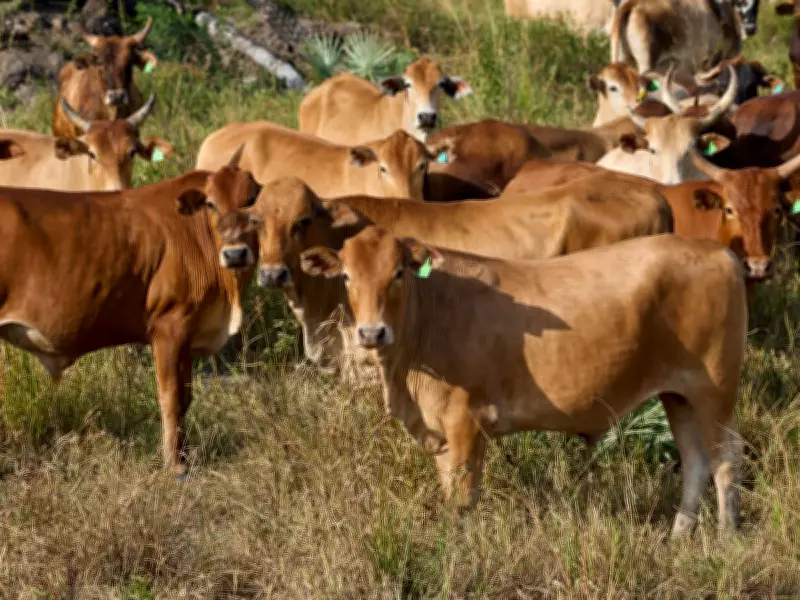
Canadian beef producers are raising alarms over the federal government's push for a free-trade agreement with the South American Mercosur bloc, warning that a surge of cheaper imported meat could devastate their multibillion-dollar industry. The concerns come as Prime Minister Mark Carney seeks to diversify Canada's export markets and reduce its heavy dependence on the United States.
Industry Leaders Voice Opposition
Tyler Fulton, president of the Canadian Cattle Association (CCA), described the proposed deal as having 'pretty dubious benefits' for Canada. 'It just doesn't represent a reciprocal market opportunity,' he said. 'There's significant benefit in accessing the Canadian beef market, but there's really very limited opportunity for Canadians.' The CCA represents 60,000 cattle farmers and feedlots across the country.
Rising Imports from Mercosur
Data from the CCA shows that beef imports into Canada from Mercosur countries surged by 238 per cent between 2021 and 2025. This year, annual import quotas were filled within days, underscoring the rapid growth in shipments from the bloc. Mercosur includes Argentina, Brazil, Paraguay, and Uruguay, with Bolivia transitioning to full membership. The group's exports are dominated by commodities such as oil, minerals, and agricultural products.

Brazil, the world's largest beef exporter, shipped 3.5 million tonnes last year, valued at US$18 billion. In the first quarter of 2026, Brazilian beef exports rose 18 per cent in volume and over a third in revenue, according to industry data. However, China—Brazil's top beef buyer—recently tightened market access, leading experts to predict that product may be diverted to other destinations, including Canada.
Potential Impact on Canadian Farmers
Fulton warned that the Mercosur deal could undermine efforts to rebuild Canada's national cattle herd after prolonged drought. 'China's quotas add a surge in imports,' he said, compounding the risk. In 2025, Canadian beef exports totaled $5.3 billion, up 7.7 per cent from 2024, despite slightly lower volumes. The U.S. remains Canada's primary market, absorbing 75 per cent of its beef exports.
Fulton dismissed claims of protectionism, noting that Canada is already 'very exposed to imports.' He pointed out that Canada imported 30 per cent of its beef last year, compared to 19 per cent in the U.S. and 7 per cent in the European Union.
Negotiation Perspectives
Welber Barral, a consultant at BMJ Associados and former Brazilian trade official, viewed Canadian opposition as a normal part of the negotiating process. 'In Europe, it ended up leading to a quota. Brazil and Mercosur will try to make it free trade. It's part of the game,' he said.
Canada initially began Mercosur talks in 2018 but reinvigorated them in response to trade turbulence with the U.S. The Carney government hopes to sign an agreement before the end of 2026, as part of a broader strategy to 'catalyze $1 trillion in total investment in Canada over the next five years.'