A groundbreaking study suggests that pigeons may rely on their livers for navigation, challenging previous assumptions about how these birds find their way home. Researchers from the Max Planck Institute of Animal Behavior in Konstanz, Germany, tracked pigeons using specialized tags to monitor their movements in May 2026.
How the Study Was Conducted
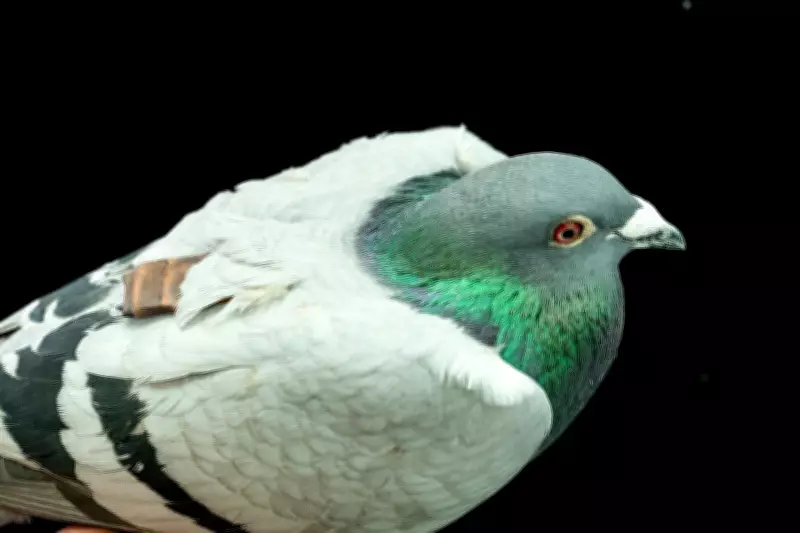
The team fitted pigeons with lightweight tracking devices that recorded their flight paths and physiological data. The tags, visible in images provided by the institute, allowed scientists to correlate navigation patterns with liver activity. The findings indicate that the liver plays a crucial role in processing environmental cues, such as magnetic fields or olfactory signals, which pigeons use to orient themselves.
Implications for Understanding Avian Navigation
This discovery adds a new dimension to the study of animal navigation. Previously, experts believed that pigeons primarily used their beaks or brains for homing. The liver's involvement suggests a more complex biological mechanism, potentially involving metabolic processes that detect subtle changes in the Earth's magnetic field or atmospheric conditions.

Dr. Christian Ziegler, a researcher at the Max Planck Institute, stated, "Our data shows a strong correlation between liver function and navigational accuracy. This opens up new avenues for research into how animals perceive their environment."
Broader Context of Animal Navigation
Pigeons are renowned for their homing abilities, but the exact mechanisms have long puzzled scientists. This study aligns with ongoing research into how various species, from sea turtles to migratory birds, find their way across vast distances. Understanding these processes could have applications in robotics, navigation technology, and conservation efforts.
The research team plans to expand their studies to other bird species to determine if liver-based navigation is a common trait. They also aim to explore how environmental changes, such as pollution or climate shifts, might affect these navigational abilities.