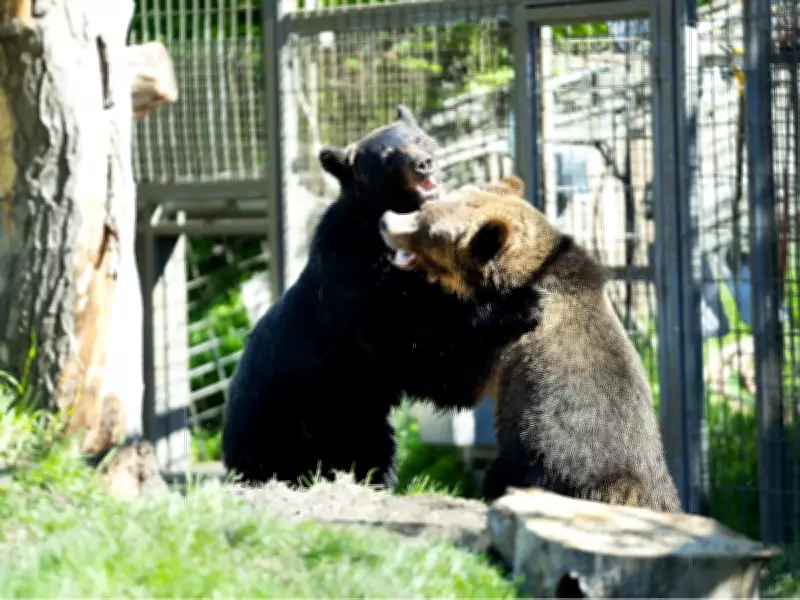
It was a bear-y good day at the Wilder Institute/Calgary Zoo on Thursday as a pair of orphaned grizzly bear cubs completed their first week settling into the Wild Canada habitat. The year-and-a-half-old cubs, named Fitz and Turner, were born in early 2025 and came under the zoo's care after their mother died protecting them during an aggressive encounter with a human.
New Permanent Home
Through collaboration with Alberta Fish and Wildlife, the duo was transferred to the zoo's holding facility for quarantine and health assessments. Wild Canada Zone supervisor Jax Hoggard confirmed that the cubs will remain permanently at the zoo. “The baby boys came here, stayed at our holding facility, received a thorough health assessment, and it turned out we had the space for them to stay permanently,” she said.
Turner, identified by his darker pelt, weighs 116 kg, while his brother Fitz is 110 kg. Their new enclosure, designed to be “cub-proofed,” features rock fixtures, branches, trees, and dig spaces to ensure safety. It will also accommodate geriatric black bears aged 12 and 15 that share the habitat.

Enrichment and Nutrition
Zoo staff scattered fruits, vegetables, and eggs for the cubs to discover through exploration and digging, promoting natural behaviors. “They’re still young and their brains are developing. If you give them something too difficult, they might get frustrated,” Hoggard explained. A zoo nutritionist oversees their diet, with each cub consuming about 5 kg of food daily. As adults, they are expected to reach heights of 8 feet and weigh 400 to 500 kg, though they will remain smaller than Kodiak grizzly bears in Alaska.
Hoggard emphasized the importance of respecting wild grizzlies: “They are probably the reason teddy bears exist, but they are apex predators. They are an umbrella species and incredibly dangerous. We need to respect them and their habitat.” She advised anyone entering bear territory to be bear smart and safe by researching and maintaining distance.